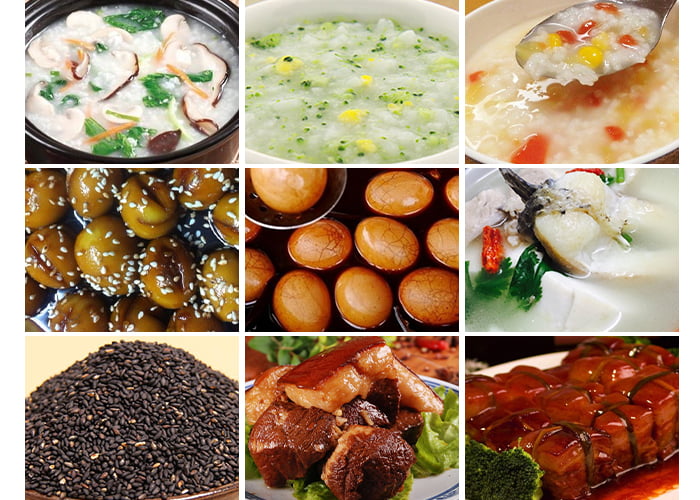
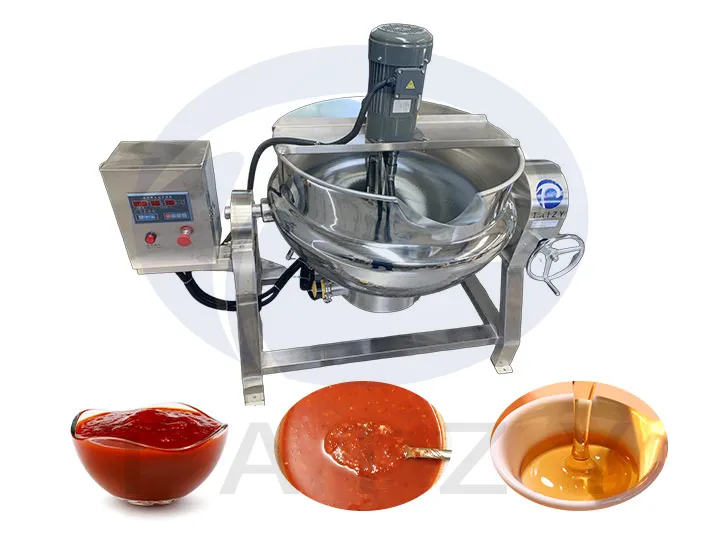
The jacketed kettle pot is a heating pot with an automatic mixing function, suitable for heating some relatively viscous materials, such as candy making, soup, making jam, and other functions. It needs constant stirring during the heating process. It has always been a troublesome pot and has a wide range of applications.

Taizy offers jacketed kettles in six capacities from 100 L to 600 L. The whole machine is made of food-grade stainless steel, with fast heating, easy cleaning, and long service life.
The double-layer pot ensures even heating on the entire inner wall, with no local hot spots. It effectively prevents uneven heating, scorching, and poor temperature control, making it suitable for both commercial mass production and small-batch processing.
What Is a Jacketed Kettle Pot?
A jacketed kettle is a food-processing cooking machine designed for even heating. It uses a double-layer structure. Steam, thermal oil, or electric heating works inside the jacket to heat the inner pot indirectly. Unlike ordinary pots that heat only from the bottom, a jacketed kettle heats the whole pot evenly, reducing scorching, sticking, and hot spots.
Made of food-grade stainless steel, the kettle provides stable temperature control and gentle heating. This helps keep taste, color, and quality consistent in batch production. Jacketed kettles are widely used for soups, sauces, jams, fillings, candies, stews, and similar products. In simple terms, it is a commercial cooking solution that combines uniform heating, precise temperature control, and efficient production.

What Can a Jacketed Kettle Be Used For?
A jacketed kettle is mainly used for heating, simmering, and cooking in the food processing and catering industries. It is ideal for applications that require even heating, stable temperature control, and batch production. Typical uses include:
Simmered and boiled foods
Indirect heating allows long-time cooking without burning:
- Soups and stocks: bone broth, thick soups, soup bases
- Porridge and grains: mixed-grain porridge, herbal porridge
- Herbal products and tonics: gelatin products, herbal pastes
Sauces and seasonings
Precise temperature control is essential for sauce processing:
- Hot pot base, chili sauce, bean paste
- Ketchup, fruit jam, salad dressing
- Brine, marinades, compound sauces
Stir-frying and fillings
With an agitator, materials are mixed continuously to prevent sticking:
- Mooncake fillings, lotus paste, red bean paste
- Dumpling, bun, and seasoned meat fillings
- Pre-cooked food materials
Stewing and meat processing
Suitable for long, constant-temperature cooking:
- Braised foods: meat, chicken, duck
- Stewed products: beef, lamb, poultry
Sugar melting, fat melting, and desserts
Accurate temperature control for heat-sensitive materials:
- Sugar, rock sugar, syrup cooking
- Chocolate melting, butter melting
- Dessert sauces, sweet soups, dairy bases
Applicable Industries
- Restaurant kitchens and central kitchens
- Food processing plants and seasoning/sauce factories
- Bakeries and dessert studios
- Ready-to-eat and semi-finished food production lines

Functions of a Jacketed Kettle Pot
A jacketed kettle is a versatile commercial cooking device designed for uniform heating, precise temperature control, and batch food processing. Its main functions include:
- Even Heating – Indirect heating via the jacket ensures uniform temperature and prevents scorching or hot spots.
- Simmering & Boiling – Ideal for soups, porridges, jams, syrups, and broths that require long, stable heating.
- Stir-Frying & Sauce Preparation – Suitable for sauces, fillings, and condiments; often paired with a built-in stirrer to prevent sticking.
- Braising & Stewing – Perfect for meats, grains, and pre-cooked dishes requiring slow, controlled cooking.
- Sugar Melting & Fat Rendering – Precise temperature control allows safe melting of chocolate, butter, sugar, and other heat-sensitive ingredients.
- Optional Keep-Warm – Some models circulate low-temperature medium in the jacket for maintaining heat after cooking, ideal for food service or batch production.

技術參數
| 型號 | 本體重量(鍋、底座等)(公斤) | 攪拌部分重量(公斤) | 蓋子重量(公斤) | 電控櫃重量(公斤) | 本體尺寸(毫米) |
| 100升 | 90 | 40 | 7 | 5 | 攪拌時:1300*1000*1220 |
| 200升 | 110 | 50 | 8 | 7 | 攪拌時:1400*1100*1300 |
| 300升 | 130 | 60 | 10 | 7 | 攪拌時:1500*1200*1500 |
| 400升 | 140 | 70 | 15 | 8 | 攪拌時:1600*1300*1550 |
| 500升 | 150 | 80 | 20 | 8 | 攪拌時:1700*1400*1600 |
| 600升 | 160 | 90 | 30 | 8 | 攪拌時:1800*1500*1650 |
Advantages of a Jacketed Kettle
Uniform Heating & Precise Temperature Control
The kettle supports steam, electric, or gas heating, circulating heat evenly through the jacket to prevent hot spots and ensure consistent cooking.


Non-Stick, Smooth Cooking Surface
Made of 304 stainless steel with a one-piece pressed hemispherical body, the interior allows smooth scraping, prevents sticking, and reduces the risk of burning.
Large, Versatile Capacity
Available in multiple sizes from 100L to 600L, with optional built-in stirrers for consistent mixing, suitable for soups, sauces, jams, and other batch productions.


Tilting Design for Easy Discharge
The kettle can tilt up to 90° using a turbine-assisted lever or rotating handle, making it effortless to pour out thick or viscous food without manual scraping.
Durable Construction
High-quality stainless steel ensures corrosion resistance, easy cleaning, and long service life, while the heavy-duty structure supports both the kettle body and accessories (stirrer, lid, control cabinet).


Efficient Batch Processing
Combined features of stirring, tilting, and precise heating allow large-scale, high-quality production with minimal labor and reduced food waste.
How to Choose a Jacket Kettle?
There are three heating methods for jacketed boilers: electric heating, steam heating, and natural gas heating. You can purchase them according to actual needs when you purchase them. Some customers may ask whether biogas can be used. Gas heating boilers can be heated with biogas. There is also the choice of stirring rods. When buying, do I need to have a stirring rod for the jacketed pan? It depends on the specific materials that need to be heated. If you are heating relatively thin materials, you don’t need to have a stirring rod. If it is a viscous material, you need to add a stirring rod.
How to Operate the Commercial Jacketed Kettle Pot?
- 將材料加入鍋中。
- 攪拌。
- 打開蒸汽入口閥,將蒸汽通入夾層(蒸汽壓力≤0.10Mpa),打開陷阱,關閉旁通閥,並加熱至指定時間。
- 當材料符合要求時,關閉蒸汽入口閥並停止攪拌。
- 握住手柄,慢慢傾斜反應夾套鍋,倒出液體。
- 液體流出後,用純化水清洗傾斜反應鍋。
- 注意壓力表的壓力,保持在≤0.10Mpa,並保持加熱要求。
- 檢查傾斜反應器安全閥的靈敏度。
- 定期檢查油封閥,防止漏油。
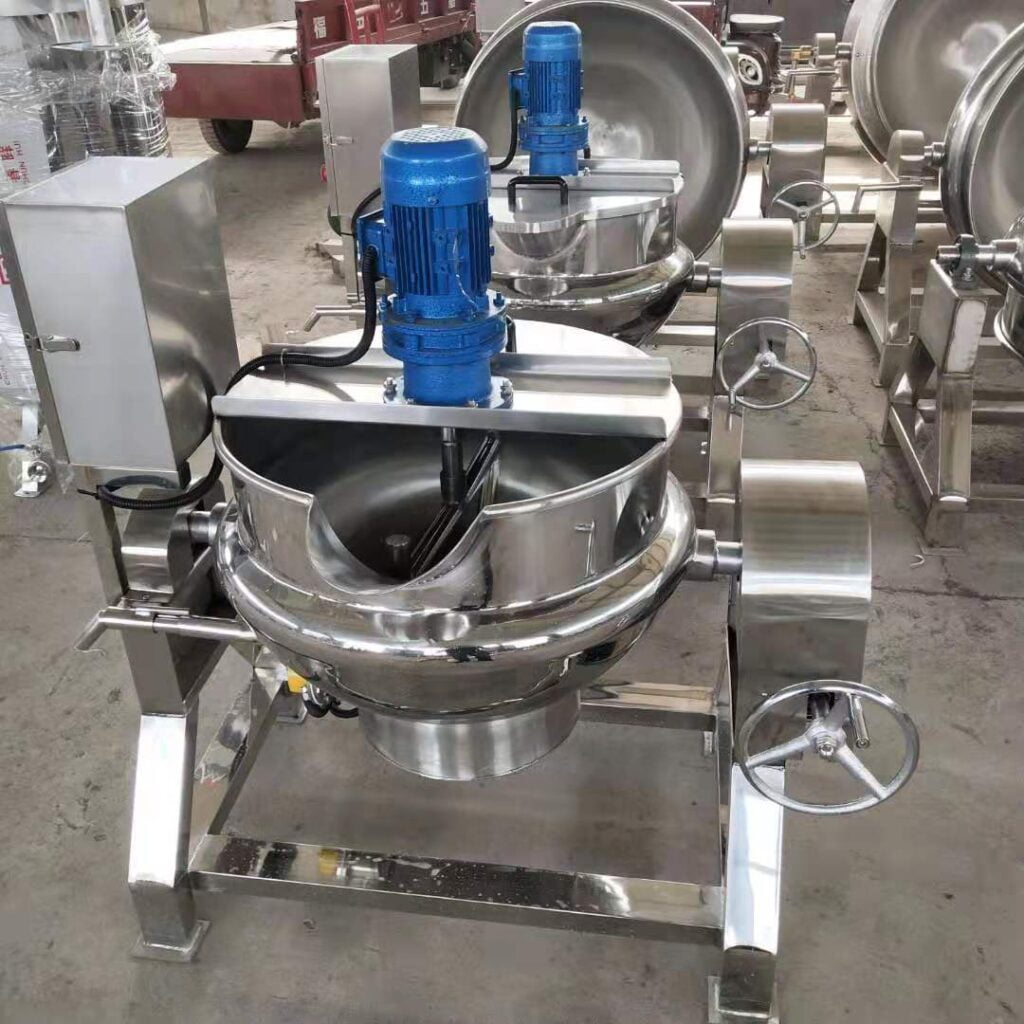
Use Case of the Jacketed Pot
在製作花生糖的過程中,糖首先需要融化,然後加入花生和其他堅果進行融合。因此,在製作花生糖的過程中,您需要一個能融化糖的設備。這款夾套鍋非常適合,您可以持續攪拌,放置糖棒鍋。