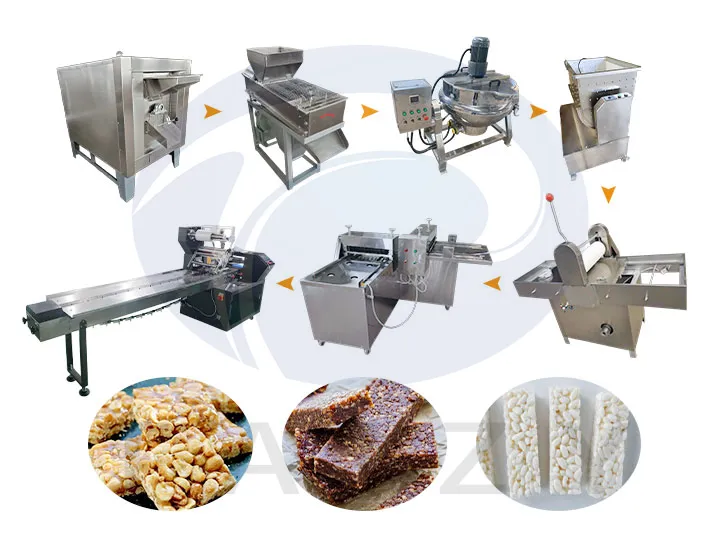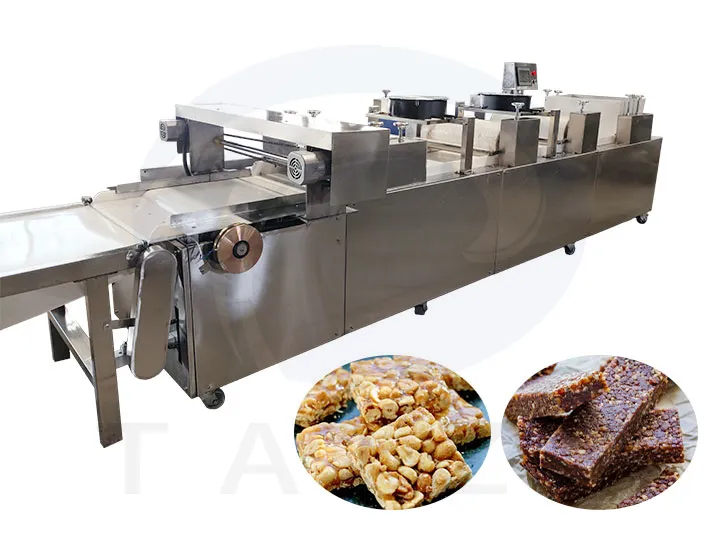
Choosing the right peanut bar cutting machine requires evaluating five critical factors: production capacity (matching your output needs), cutting precision and adjustability (for consistent product quality), machine material and food safety certifications (stainless steel construction), automation level (PLC control vs. manual operation), and after-sales support (warranty, technical support, and spare parts availability).
Investing in the proper cutting equipment is crucial for your confectionery business’s success. The right machine can increase your production efficiency by up to 300% while maintaining consistent product quality. This comprehensive guide will help you make an informed decision when purchasing a peanut brittle cutting machine or nut bar slicing equipment.
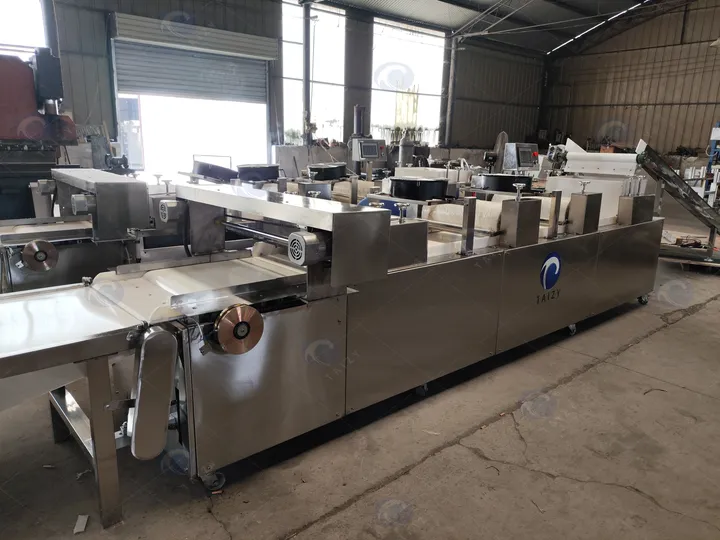
Why Choosing the Right Cutting Machine Matters?
The peanut candy bar machine you select directly impacts your production efficiency, product quality, operational costs, and ultimately, your profitability. A poorly chosen machine can lead to:
- ❌ Inconsistent bar sizes causing packaging issues
- ❌ High material waste (up to 5-10% with inferior equipment)
- ❌ Frequent breakdowns and production downtime
- ❌ Difficulty meeting food safety standards
- ❌ Excessive labor costs due to manual operation requirements
- ❌ Limited product flexibility preventing market expansion
Conversely, investing in a high-quality groundnut chikki cutter offers numerous advantages including consistent product quality, reduced waste, lower operating costs, and the flexibility to produce various bar sizes and types.
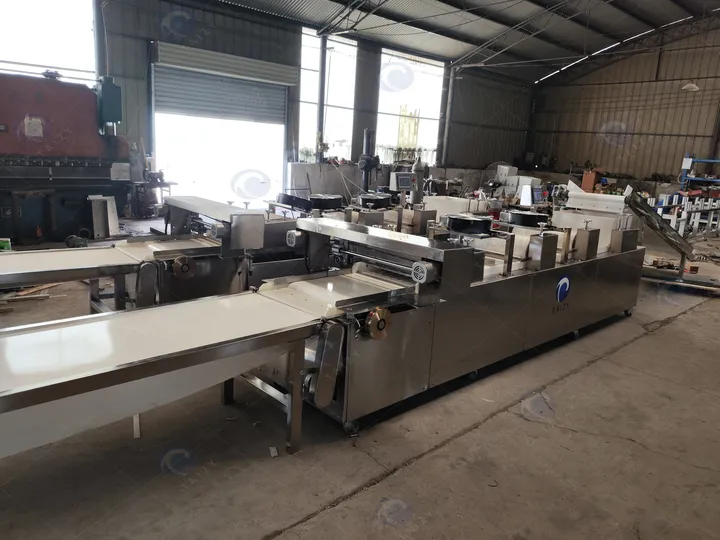
Factor 1: Production Capacity Requirements
The first and most critical factor is matching the machine’s capacity to your production needs. Peanut bar cutting machines are available in various capacities, from small-scale units producing 50-100 kg/h to industrial systems capable of 500-1000 kg/h or more.
Assessing Your Capacity Needs
Consider the following when determining your required capacity:
Current Production Volume
Calculate your average daily or weekly production requirements. Don’t just estimate—analyze your actual order history and production records.
Future Growth Plans
Plan for growth. Choose a machine with 20-30% higher capacity than your current needs to accommodate business expansion without immediate reinvestment.
Operating Hours
Consider how many hours per day you’ll operate. If running multiple shifts, you may need a more robust industrial model designed for continuous operation.
Product Mix
Different products may require different processing speeds. If you produce multiple types of bars, choose a machine with flexible capacity settings.
Capacity Guidelines by Business Size
| Business Type | Recommended Capacity | Typical Models |
|---|---|---|
| Small Bakery/Startup | 50-150 kg/h | Semi-automatic models |
| Medium Production Facility | 150-400 kg/h | Automatic models with PLC |
| Large Industrial Plant | 400-1000+ kg/h | Fully automatic production lines |
Factor 2: Cutting Precision and Adjustability
Precision cutting is essential for product consistency, attractive presentation, and efficient packaging. The best peanut brittle cutting machines offer precise control over all cutting dimensions.
Key Precision Features
Cutting Thickness Range
Look for machines offering adjustable thickness from 6mm to 10mm or wider. The adjustment mechanism should be precise and easy to operate, allowing quick changes between batches.
Cutting Width Options
Standard width options include 30mm, 40mm, and 60mm. The best machines come with multiple blade sets included, allowing you to produce various bar widths without purchasing additional equipment.
Length Adjustment
The cross-cutter speed should be infinitely adjustable, allowing you to produce bars of any length within the machine’s range. PLC-controlled systems offer the highest precision.
Tolerance Levels
High-quality machines maintain cutting tolerance within ±1mm. This precision ensures uniform packaging and professional product appearance.
Blade Quality and Durability
The cutting blades are critical components that directly affect cut quality and maintenance costs:
- ✅ Material: Look for high-carbon stainless steel blades for durability and food safety
- ✅ Hardness: Blades should be heat-treated to maintain sharpness through extended use
- ✅ Replaceability: Easy blade replacement reduces downtime during maintenance
- ✅ Availability: Ensure replacement blades are readily available from the manufacturer
- ✅ Blade Configuration: Machines offering multiple blade options provide greater product flexibility
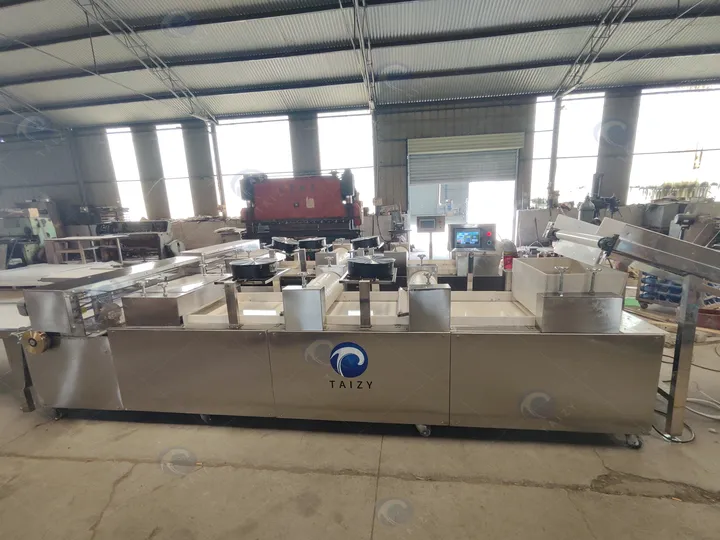
Factor 3: Machine Material and Food Safety
Food safety is paramount in confectionery production. The materials used in your nut bar slicing machine must meet international food safety standards and be suitable for your specific production environment.
Material Requirements
Food-Grade Stainless Steel
All product contact surfaces should be made of 304 or 316 stainless steel. This material is corrosion-resistant, easy to clean, and doesn’t react with food products.
Conveyor Belt Material
PVC or food-grade plastic conveyor belts are standard. They should be easy to clean, resistant to sticky products, and approved for food contact.
Essential Certifications
When evaluating a groundnut chikki cutter, verify that it has the necessary certifications for your market:
- ✅ CE Certification: Required for European markets, ensures safety and compliance
- ✅ ISO9001: Quality management system certification
- ✅ SGS/TUV Certification: Independent verification of quality and safety
- ✅ FDA Compliance: Required for US market (food contact materials)
- ✅ HACCP Compatibility: Supports Hazard Analysis Critical Control Point systems
Cleaning and Sanitation Features
Easy cleaning is essential for maintaining food safety standards:
- Look for machines with smooth surfaces and minimal crevices where product can accumulate
- Quick-disconnect components make cleaning faster and more thorough
- Accessible cutting areas allow easy removal of product residue
- Water-resistant electrical components prevent damage during cleaning
Factor 4: Automation Level and Control Systems
The level of automation significantly impacts labor costs, production consistency, and operational complexity. Peanut candy bar machines range from semi-automatic to fully automatic with advanced PLC controls.
Automation Levels Compared
| Automation Level | Features | Best For |
|---|---|---|
| Semi-Automatic | Manual feeding, automatic cutting, basic controls | Small businesses, low volume, tight budgets |
| Automatic | Automatic feeding and cutting, digital controls, parameter memory | Medium production, consistent products |
| Fully Automatic with PLC | Complete automation, touchscreen interface, recipe storage, self-diagnostics | Large-scale production, multiple products |
Advanced Control Features to Look For
Frequency Conversion Control
Allows precise speed adjustment and smooth operation, reducing mechanical stress and energy consumption.
Electronic Eye Tracking
High-sensitivity sensors automatically detect and position products for precise cutting, minimizing waste.
Recipe Memory
Store multiple product settings for quick changeovers between different bar types and sizes.
Fault Diagnosis
Self-diagnostic systems alert operators to problems before they cause downtime or quality issues.
Factor 5: After-Sales Support and Warranty
The support you receive after purchase is just as important as the machine quality itself. Comprehensive after-sales service ensures minimal downtime and maximum return on your investment.
Warranty Coverage
Standard warranties for peanut bar cutting machines typically include:
- ✅ 1-Year Warranty: Coverage for main components (motor, gearbox, control system)
- ✅ Lifetime Technical Support: Remote assistance via phone, email, or video call
- ✅ Spare Parts Availability: Guaranteed parts supply for the machine’s lifetime
- ✅ Installation Support: Manual, video guidance, or on-site assistance (varies by supplier)
Questions to Ask Suppliers
Before purchasing, ask potential suppliers these critical questions:
- What is covered under the warranty, and what are the exclusions?
- How quickly can you provide replacement parts?
- Do you offer installation support, and is it included in the price?
- Is operator training available? Is there an additional cost?
- What is the expected lifespan of cutting blades, and how much do replacements cost?
- Do you provide remote troubleshooting support?
- Can you provide references from customers in my region?
Cost-Benefit Analysis
While price is important, focusing solely on the initial purchase price can be misleading. Consider the total cost of ownership:
Total Cost Components
Initial Purchase Price
The upfront cost, but typically only 40-60% of total ownership cost over 5 years.
Operating Costs
Energy consumption, labor requirements, and consumables (blades, lubricants).
Maintenance Costs
Regular maintenance, replacement parts, and unexpected repairs.
Downtime Costs
Lost production due to breakdowns or maintenance. High-quality machines minimize this.
ROI Calculation Example
A higher-quality machine costing 30% more initially might offer:
- ✓ 50% less material waste (saving $5,000-10,000 annually)
- ✓ 40% lower labor costs (automatic vs. semi-automatic)
- ✓ 60% less downtime (better reliability)
- ✓ 25% higher production capacity
- Result: Payback period of 12-18 months, then pure profit improvement
Making Your Final Decision
After evaluating all five factors, create a comparison matrix scoring each machine on:
- Capacity match (20 points)
- Cutting precision and adjustability (25 points)
- Material quality and certifications (20 points)
- Automation level and features (20 points)
- After-sales support and warranty (15 points)
The machine with the highest total score—not necessarily the lowest price—will provide the best long-term value for your business.
Conclusion
Choosing the right peanut bar cutting machine is a significant investment decision that will impact your production efficiency, product quality, and profitability for years to come. By carefully evaluating these five critical factors—capacity, precision, material quality, automation level, and after-sales support—you can make an informed decision that positions your business for success.
Remember that the cheapest option upfront often costs more in the long run through higher operating costs, more downtime, and shorter equipment life. Invest in quality, and your peanut brittle cutting machine will become a reliable profit center for your confectionery business.
Ready to explore your options? View our range of peanut bar cutting machines or contact our team for personalized recommendations based on your specific production needs.
Related Products
Explore our complete range of confectionery equipment:
Peanut Brittle Block Production Line
Semi-automatic production line integrating mixing, forming, cooling, and cutting. Ideal for businesses looking to scale up peanut candy production.
Learn more about Peanut Brittle Block Production Line →