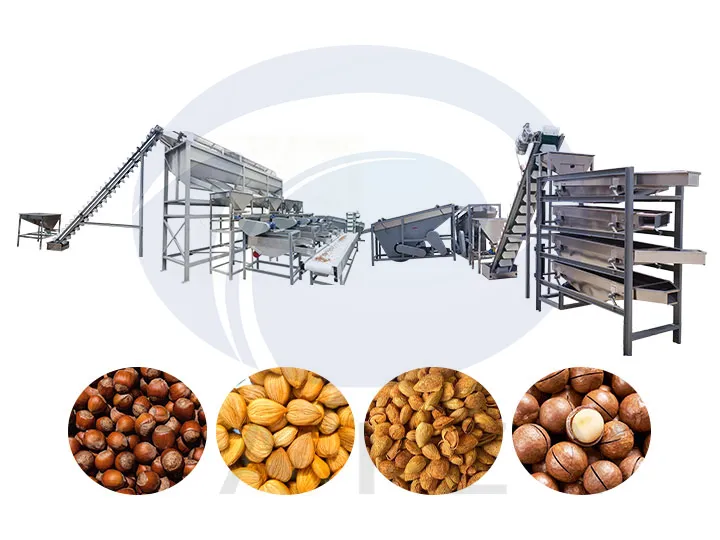
In modern nut processing, the apricot kernel shelling machine is essential for high yield, efficiency, and intact kernels. It mainly separates shells from kernels through three key processes: power transmission, shell cracking by pressure, and screening and separation. This article explains its working principle and design features in detail.
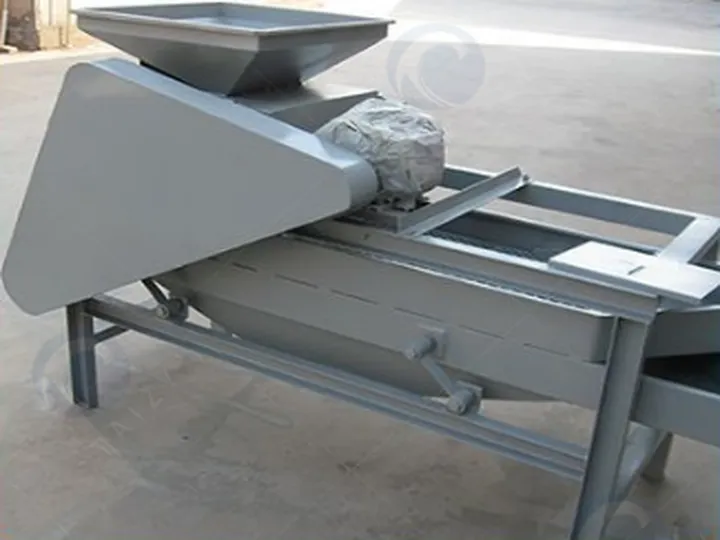
動力傳輸系統
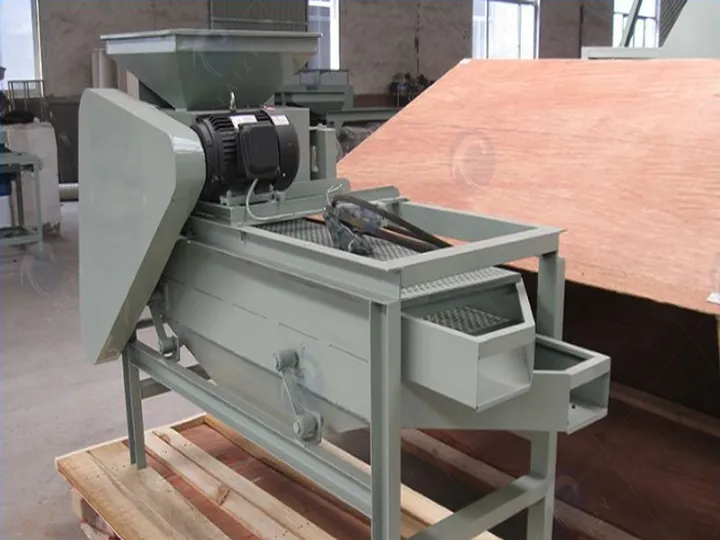
杏仁殼機通常由單一電動機驅動,通過皮帶和鏈條將能量傳遞給滾輪和偏心機構,確保運行平穩。常見設計特點包括:
- 高速傳動: 電動機高速運轉(超過1000轉/分鐘),帶動小皮帶輪轉動大皮帶輪和主軸,從而驅動打擊輪或破碎滾輪。
- 穩定傳動: 鏈條或齒輪保持滾輪和去殼機構的穩定運動,確保均勻破裂和仁的完整。
該系統是高效運行的基礎,對於穩定產出和延長機器壽命至關重要。
破碎與去殼
去殼是杏仁殼機的核心工序。它通過壓力和摩擦裂開殼殼,同時保持仁完整。流程包括:
- 間隙調整: 滾輪間隙根據仁的大小和硬度設置,確保殼裂開而不損傷仁。
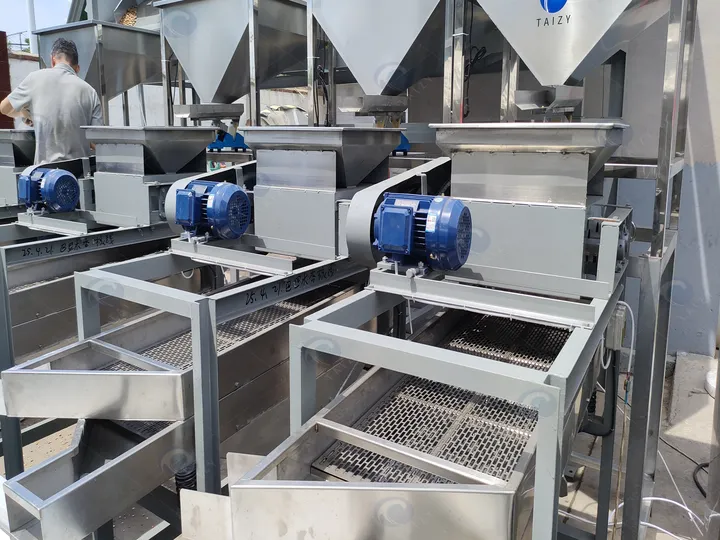
- 壓榨與摩擦: 仁通過進料口進入,並由旋轉滾輪或破碎軸壓揉摩擦。滾輪通常具有斜槽或凹點,以增加摩擦力,防止滑動,提高去殼效率和仁的完整性。
- 二次去殼: 較硬或較小的仁在第一次破碎不完全時,會被篩分並送回二次壓榨,以確保完全去殼。
With proper gap adjustment and roller design, the machine achieves a balance of high shelling rate and low kernel damage.
篩分與分離
去殼後,混合物中含有殼、仁和碎屑,通過振動篩進行分離:
- 上篩: 孔徑較大,能將未破碎的仁(用於二次去殼)與殼仁混合物分離。
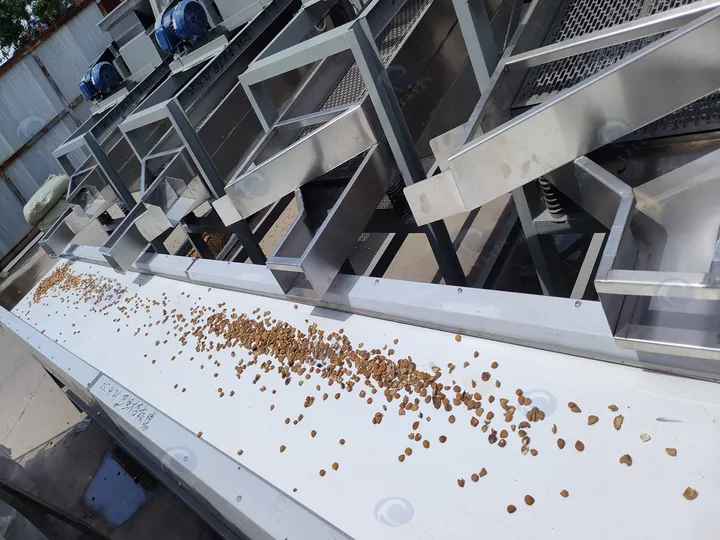
- 下篩: 孔徑較小,能將殼碎片與完整殼仁混合物分離。整個仁則通過傳送帶收集。
振動篩利用前後擺動進行自動分離,減少人工操作,提高生產效率。
主要設計特點
- 高度適應性: 滾輪間隙可調,以處理不同大小和硬度的仁。
- 高效率,低損傷: 凹槽或凹點滾輪可減少仁的破碎,振動篩自動分離未破裂的物料。
- 高自動化: 篩分和傳送系統減少人工工作,確保連續生產。
如何實現高去殼率且仁損傷低?
Before operating the apricot kernel shelling machine, ensure it is clean, all fasteners are secure, and roller gaps are set according to kernel size. Feed kernels evenly and slowly to prevent overloading. While discharging, monitor kernel integrity; if there are too many broken or uncracked kernels, adjust the roller gap or send the material for a second pass.
生產後,清潔滾輪、篩子和傳送帶,檢查皮帶、鏈條和電動機運行。保持機器乾燥清潔,有助於延長使用壽命並維持穩定的去殼性能。