In modern nut processing, the apricot kernel shelling machine is essential for high yield, efficiency, and intact kernels. It mainly separates shells from kernels through three key processes: power transmission, shell cracking by pressure, and screening and separation. This article explains its working principle and design features in detail.
动力传输系统
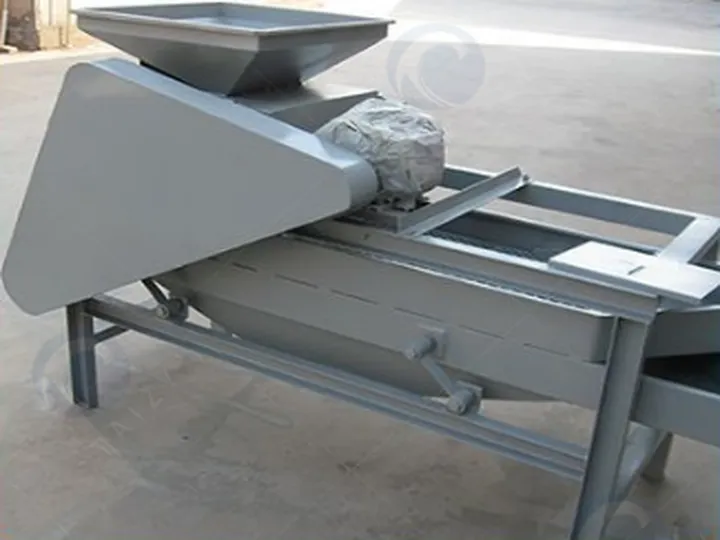
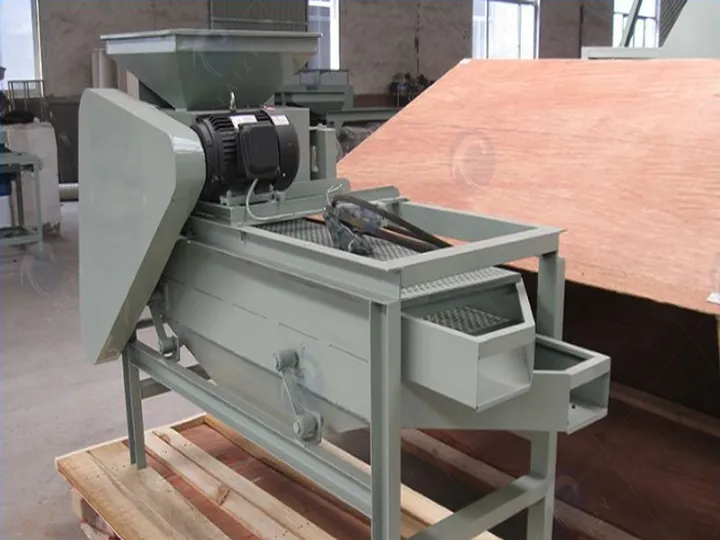
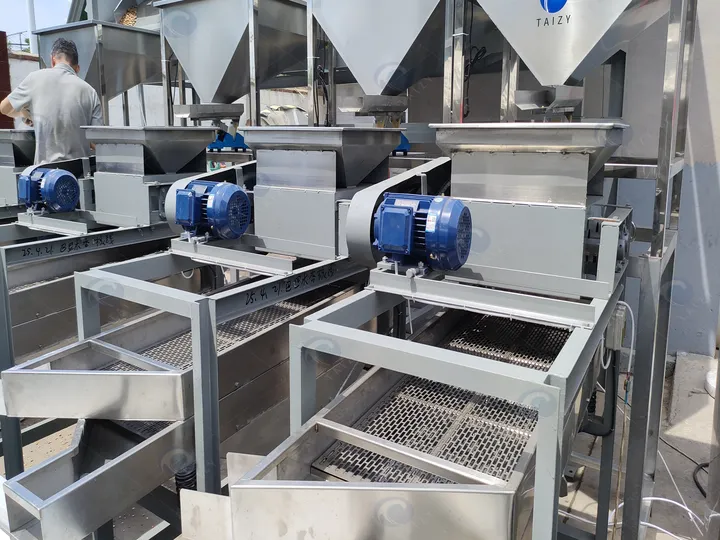
杏仁壳碎机通常由单个电动机驱动,通过皮带和链条将能量传递给辊筒和偏心机构,确保运行平稳。常见设计特点包括:
- 高速驱动: 电动机高速运转(超过1000转/分钟),带动小皮带轮,驱动大皮带轮和主轴,主轴带动打击轮或破碎辊。
- 稳定传动: 链条或齿轮保持辊筒和破壳机构的稳定运动,确保均匀破碎和核仁完整。
该系统是高效运行的基础,是实现稳定产量和延长设备使用寿命的关键。
破碎与壳碎
壳碎是杏仁壳碎机的核心工艺。它通过压榨和摩擦破碎壳体,同时保持核仁完整。工艺包括:
- 间隙调节: 辊筒间隙根据核仁大小和硬度设置,确保壳裂开而不损伤核仁。
- 压榨和摩擦: 核仁通过进料口进入,被旋转辊筒或破碎轴压榨和摩擦。辊筒通常具有倾斜的沟槽或凹凸,以增加摩擦力,防止滑动,提高破壳效率和核仁完整性。
- 二次破壳: 较硬或较小的未在第一次完全破碎的核仁会被筛选出来,送回二次压榨以确保壳完整。
With proper gap adjustment and roller design, the machine achieves a balance of high shelling rate and low kernel damage.
筛分与分离
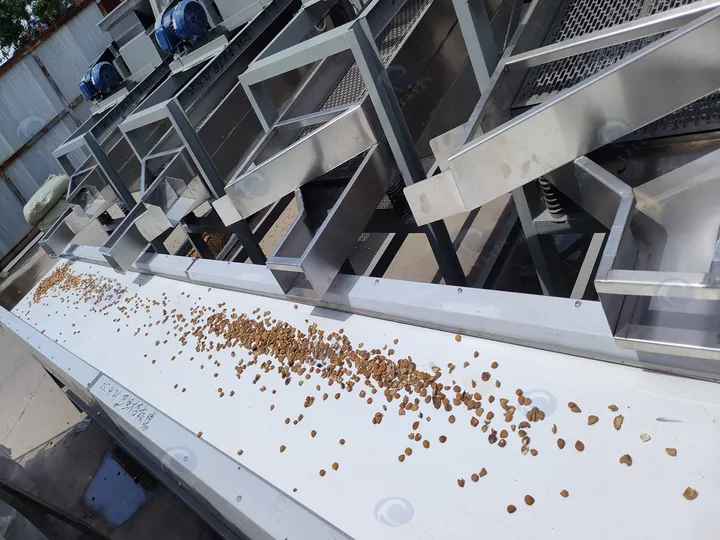
壳碎后,混合物中包含壳、核仁和碎片,利用振动筛进行分离:
- 上筛: 孔径较大时,将未破碎的核仁(用于二次破壳)与壳核混合物分离。
- 下筛: 孔径较小,能将壳碎片与完整的壳核混合物分离。完整的核仁通过输送系统收集。
振动筛采用往复运动进行自动分离,减少人工操作,提高生产效率。
关键设计特点
- 高适应性: 辊筒间隙可调,以适应不同大小和硬度的核仁。
- 高效率,低损伤: 凹槽或凹凸辊减少核仁破碎,振动筛自动分离未破碎的物料。
- 高自动化: 筛选和输送系统减少人工操作,确保连续生产。
如何实现高破壳率和低核仁损伤?
Before operating the apricot kernel shelling machine, ensure it is clean, all fasteners are secure, and roller gaps are set according to kernel size. Feed kernels evenly and slowly to prevent overloading. While discharging, monitor kernel integrity; if there are too many broken or uncracked kernels, adjust the roller gap or send the material for a second pass.
生产后,清洗辊筒、筛子和输送机,检查皮带、链条和电机的运行。保持设备干燥清洁,有助于延长使用寿命并保持稳定的壳碎效果。