If you are planning to enter the cashew processing business or upgrade your existing facility, one of the first questions is: how much does a complete cashew processing line cost?
In general, a complete cashew processing line costs approximately USD 25,000–100,000, depending on production capacity, automation level, machine configuration, materials, and after-sales service. A small semi-automatic line for cooperatives or startups is usually at the lower end of the range, while a fully automatic export-grade processing line requires a larger investment.
Note before reading: If you are interested in the machine featured in this article, please click the three contact options on the right-hand pop-up window to get in touch with us. We will provide you with a quotation within 24 hours.
This guide explains what affects the price, what equipment is included, and how to choose the right system for your budget.
What Does a Cashew Processing Line Include?
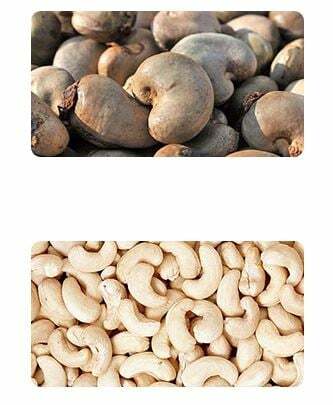
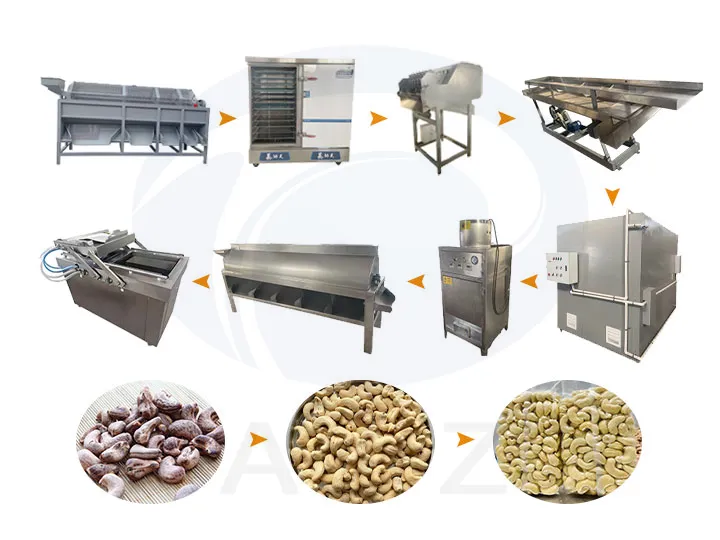
A standard cashew processing line converts raw in-shell cashews into market-ready kernels through several processing stages.
Typical production process:
Grading → Steaming/Cooking → Shelling → Shell-Kernel Separation → Drying → Peeling → Final Grading → (Optional) Roasting → Vacuum Packing
Some processors skip roasting if they only sell raw kernels, which can reduce the overall investment.
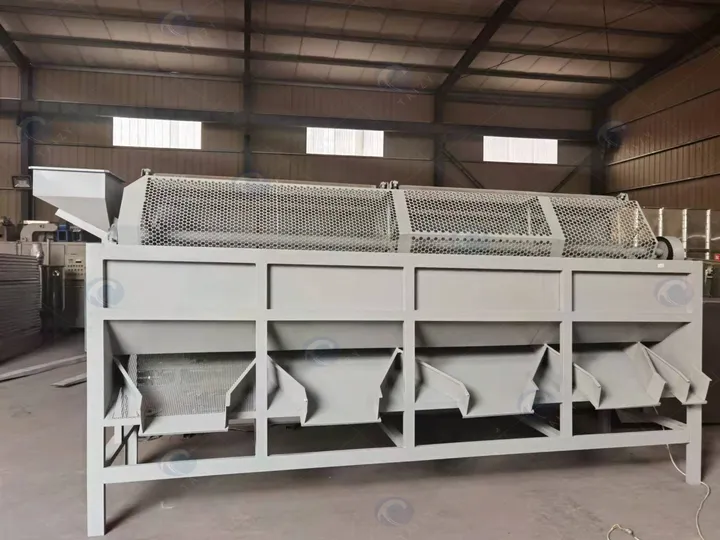
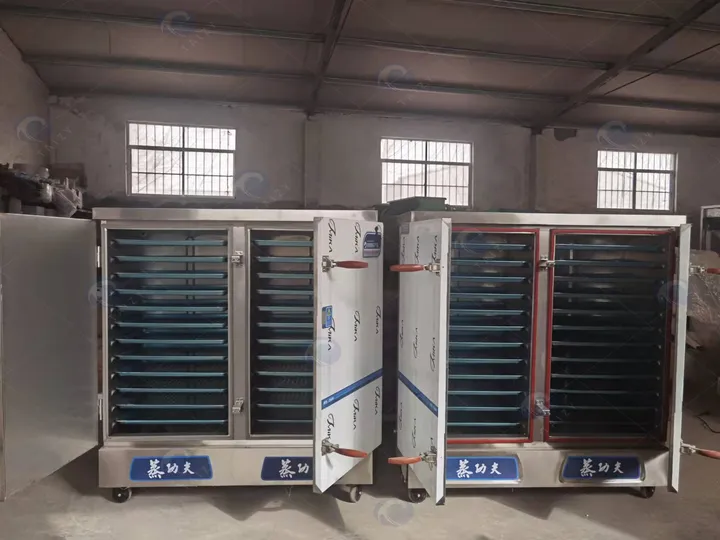
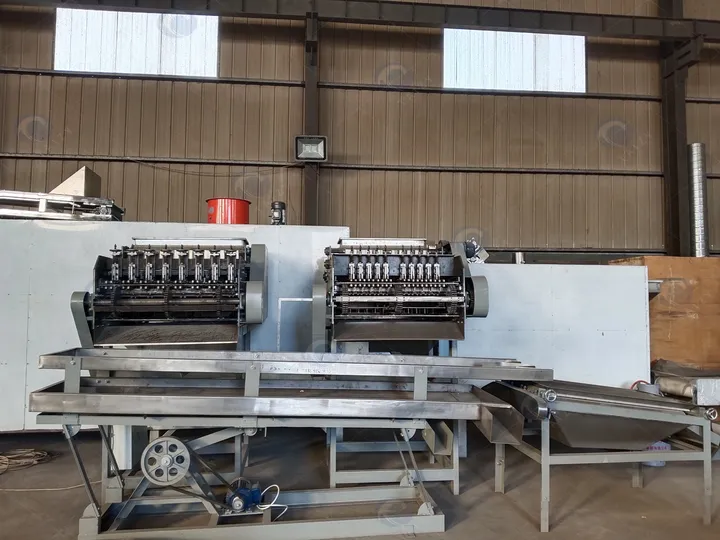
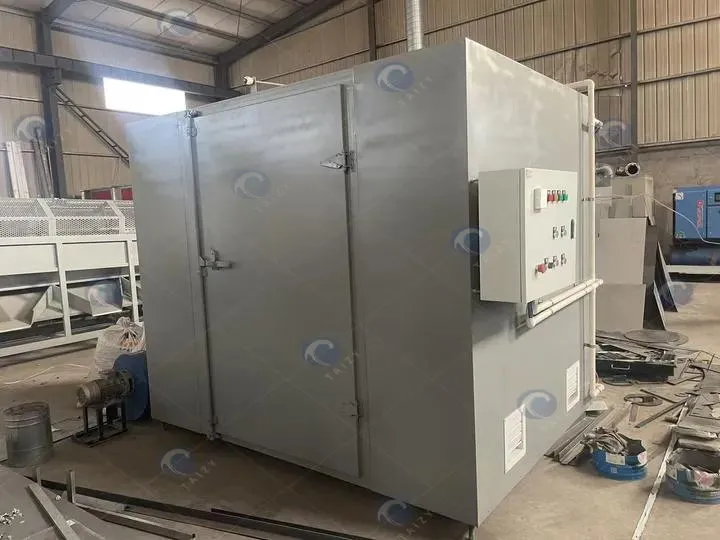
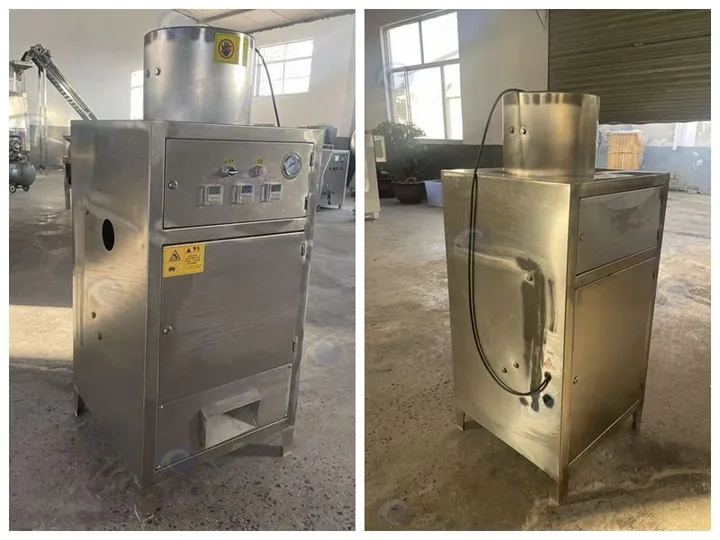
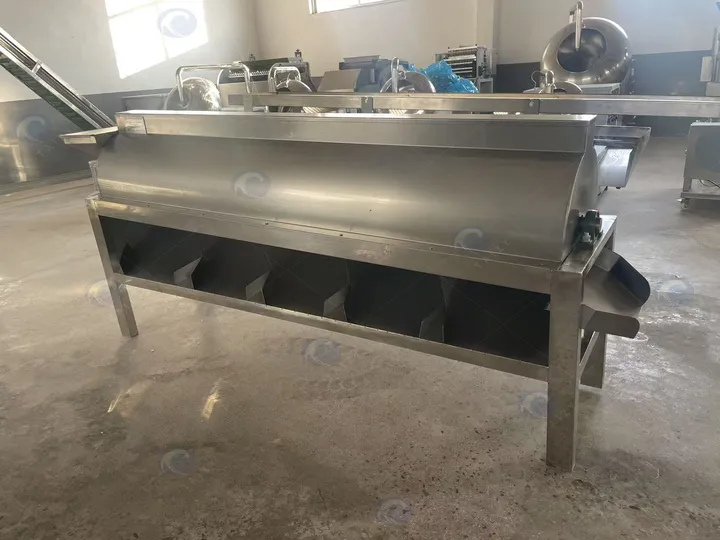
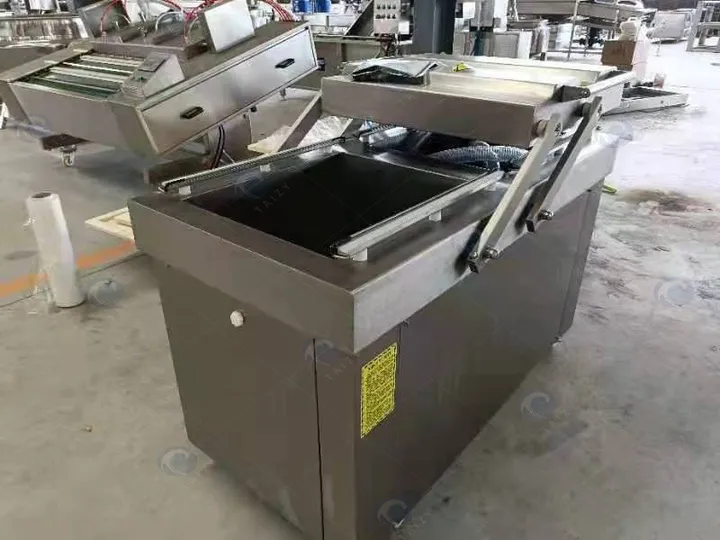
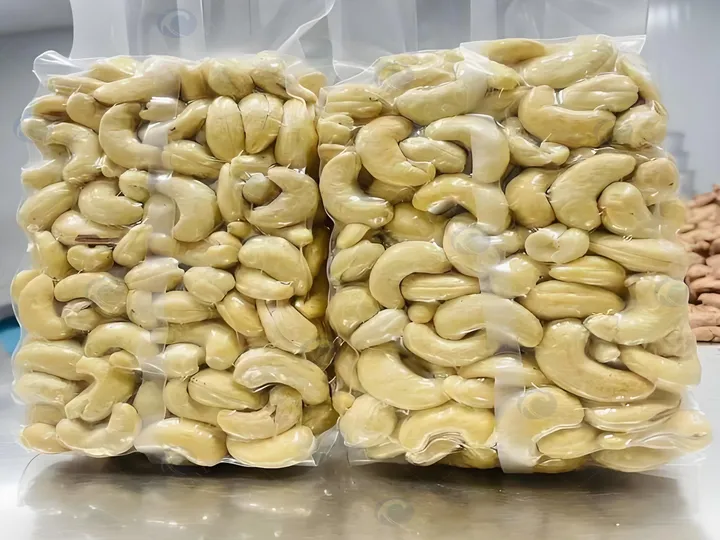
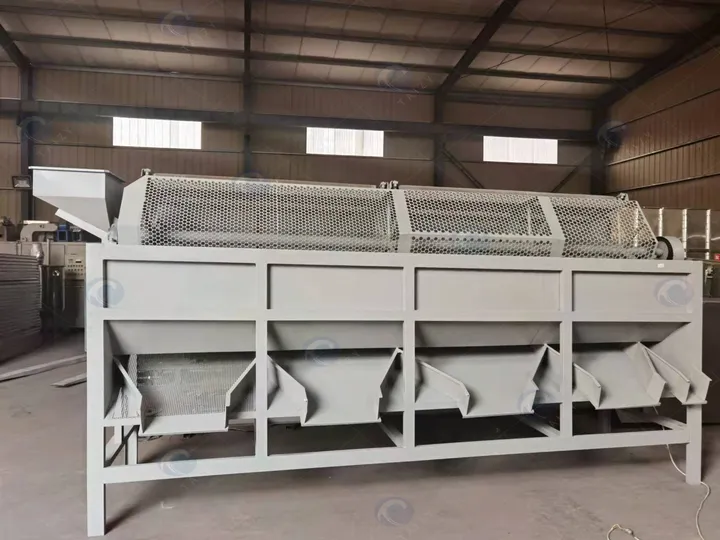
Raw Nut Grading
Grading machines separate cashews by size before shelling. Uniform sizing improves shelling efficiency and reduces kernel breakage. Although relatively inexpensive, grading is essential for stable production.
Steaming or Cooking
Cashew shells contain CNSL (Cashew Nut Shell Liquid), which is corrosive and makes shelling more difficult. Steaming softens the shell, improves shelling performance, and reduces kernel damage. Steam, gas, and electric heating systems are all available, with different equipment and operating costs.
Shelling and Separation
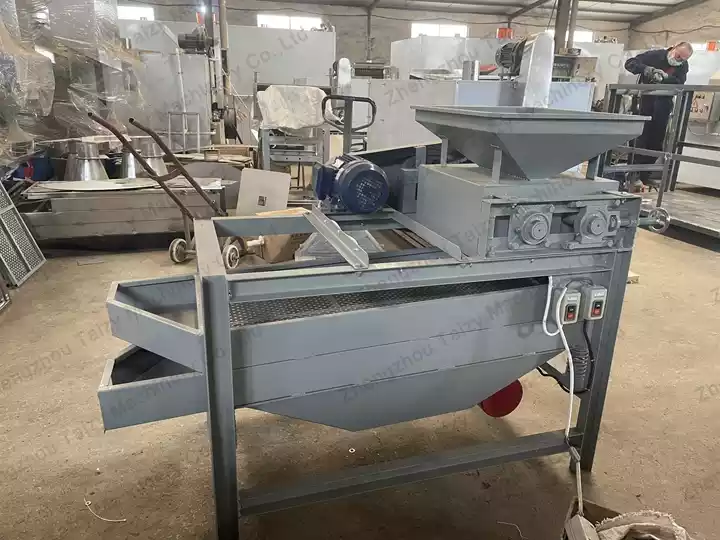
Shelling is the core process of the entire production line. Mechanical shelling machines crack the shell while protecting the kernel, making them one of the most valuable pieces of equipment.
Higher-end shellers generally offer:
- Higher processing capacity
- Lower kernel breakage
- Better shell-kernel separation
- Higher finished product value
Drying
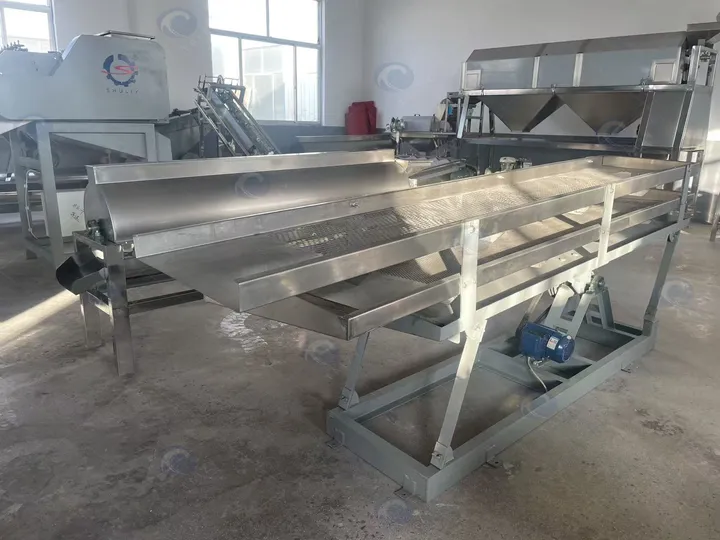
After shelling, kernels must be dried before peeling and storage. Drying ovens range from simple batch dryers to automatic temperature-controlled systems. Stainless steel construction increases durability and food safety while reducing corrosion.
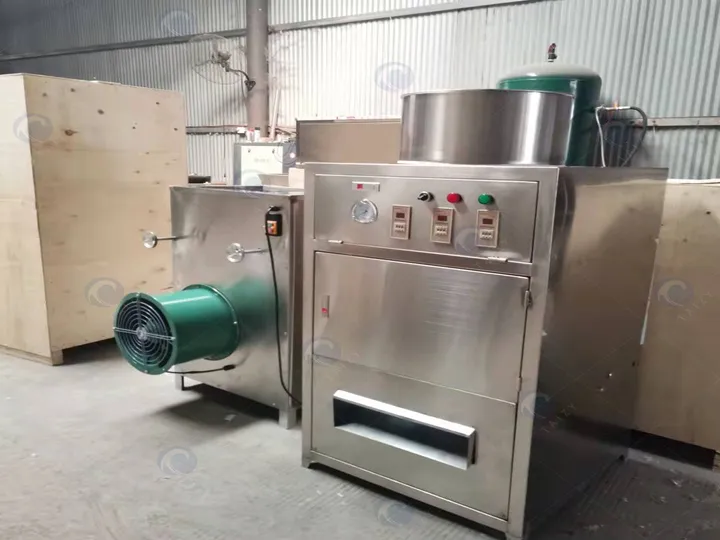
Kernel Peeling
Peeling removes the thin testa from the kernel. Pneumatic and friction-type peelers commonly achieve over 98% peeling efficiency, producing the white kernels required for export markets.
Final Grading and Packing
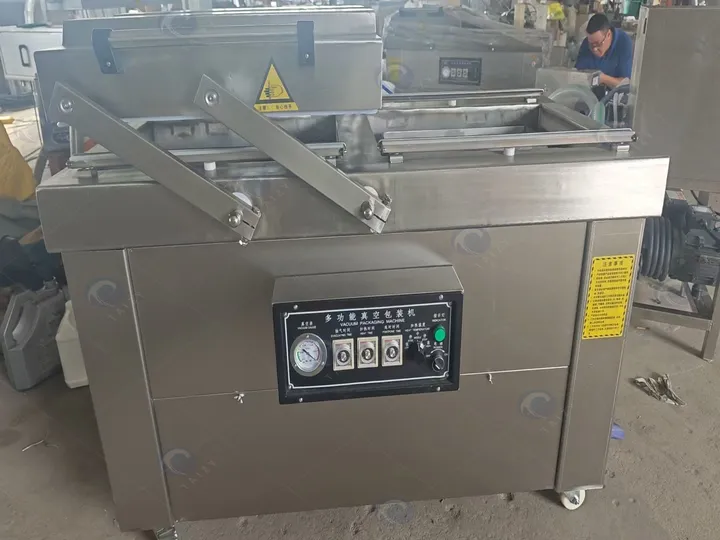
Grading machines classify kernels into whole, split, and broken grades. Vacuum packing removes oxygen, extending shelf life and protecting product quality during transportation. For export markets, vacuum packaging is considered essential.
What Determines the Cost of a Cashew Processing Line?
Although complete lines generally cost USD 25,000–100,000, several factors create this price difference.
1. Automation Level
Automation has the greatest impact on price.
A semi-automatic line requires operators to transfer materials and perform manual sorting. It has a lower purchase cost and simpler maintenance but requires more labor.
A fully automatic line integrates conveyors, automatic feeding, and automatic discharge, reducing labor requirements while increasing production efficiency. Although the initial investment is higher, it becomes more economical for medium and large processing plants.
2. Production Capacity
Typical capacities include:
- 100 kg/h
- 200 kg/h
- 400 kg/h
- 800 kg/h and above
Higher-capacity equipment requires larger motors, stronger frames, and more durable components, naturally increasing the overall investment.
Choose equipment based on your actual raw cashew supply. Oversized equipment increases idle costs, while undersized equipment quickly limits future expansion.
3. Machine Materials
Equipment with 304 food-grade stainless steel contact parts costs more than carbon steel models but offers significant advantages:
- Better corrosion resistance
- Compliance with food safety standards
- Longer service life
- Easier cleaning and maintenance
For processors targeting export markets or HACCP/ISO standards, stainless steel is generally the preferred choice.
4. Electrical Specifications
Voltage, frequency, and motor configuration vary between countries. Customized electrical systems may affect pricing, depending on the supplier.
5. Auxiliary Equipment
Some suppliers include items such as:
- Air compressors
- Spare parts
- Extra screens and belts
- Tool kits
Although bundled systems may appear more expensive initially, they often reduce long-term operating costs.
6. Shipping and Logistics
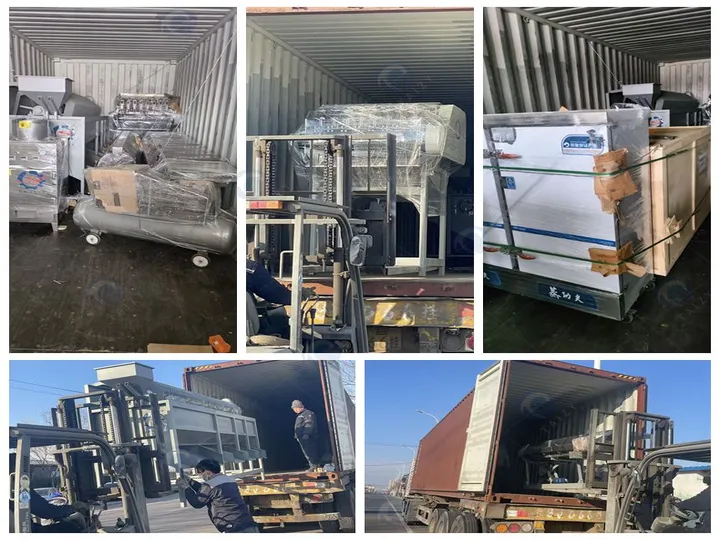
A complete cashew processing line usually requires a 40-foot high-cube container for transportation. Besides ocean freight, buyers should also budget for customs clearance, inland transportation, and local handling fees.
Additional Costs to Consider
Besides the equipment itself, your investment may also include:
- Installation and commissioning
- Operator training
- Spare parts inventory
- Factory electrical and facility upgrades
- Working capital for seasonal raw cashew purchases
Planning for these expenses helps avoid unexpected costs after installation.
Semi-Automatic vs Fully Automatic Cashew Processing Line
| Factor | Semi-automático | Fully Automatic |
|---|---|---|
| Initial investment | Menor | Higher |
| Labor required | 8–15 workers | 3–5 workers |
| Capacidad | 100–300 kg/h | 300–800 kg/h |
| Maintenance | Simpler | More advanced |
| Suitable for | Startups, cooperatives | Large factories, export processors |
| Long-term operating cost | Higher labor cost | Higher efficiency, lower labor cost |
For many startups in Africa and Southeast Asia, a semi-automatic line offers an affordable entry point and can later be upgraded as production expands.
How to Choose the Right Processing Line?
Step 1. Evaluate Raw Material Supply
Estimate how many tons of raw cashews you can consistently purchase each month. Ideally, equipment capacity should match 80–90% of your available supply.
Step 2. Define Your Target Market
Domestic markets may accept simpler grading and packaging, while export markets require whole kernels, consistent sizing, and vacuum packaging.
Step 3. Consider Labor Costs
Where labor is inexpensive and readily available, semi-automatic lines can be cost-effective. In regions with higher labor costs, automation often delivers better long-term returns.
Step 4. Plan for Future Growth
If production is expected to increase within the next few years, choose equipment with expansion potential rather than replacing an undersized line later.
Step 5. Evaluate Your Supplier
Price should not be the only consideration. Also evaluate:
- Installation support
- Operator training
- Spare parts availability
- Experience with overseas projects
- After-sales service
How to Get an Accurate Quotation?
Because every processing plant has different requirements, suppliers typically request the following information before preparing a quotation:
- Daily or monthly processing capacity
- Local power supply (voltage, phase, frequency)
- Semi-automatic or fully automatic configuration
- Target market (domestic or export)
- Existing factory or new project
Based on these details, they can recommend the most suitable configuration and provide a detailed quotation covering equipment, accessories, and shipping.
Final Thoughts
A complete cashew processing line generally costs USD 25,000–100,000, depending on automation, production capacity, materials, and machine configuration. Selecting equipment that matches your raw material supply, labor conditions, and market goals is far more important than simply choosing the lowest price.
A properly configured processing line can improve production efficiency, increase kernel recovery, reduce labor costs, and help produce consistent export-quality cashew kernels—providing long-term returns on your investment.
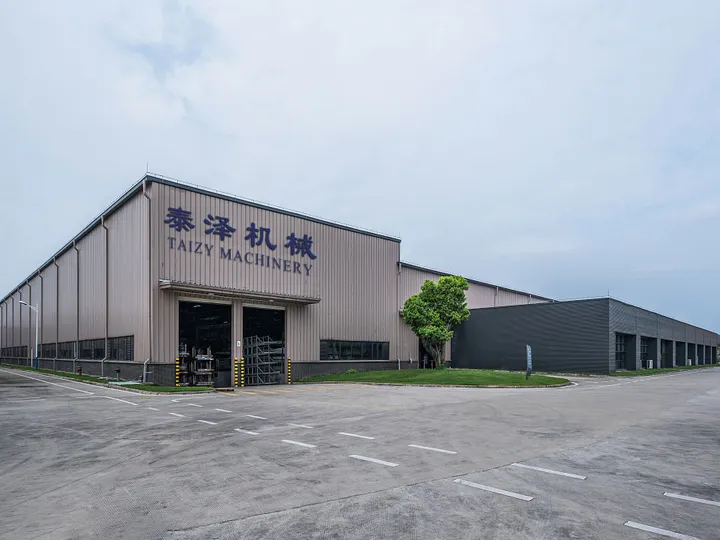
If you would like a customized solution, Taizy Machinery can recommend the most suitable cashew processing line based on your production capacity and provide a detailed quotation including equipment configuration and shipping costs.
Click the contact window on the right to get in touch with us. We will provide you with a quotation within 24 hours.