A chocolate stone grinder typically costs between 1,500 and 20,000 USD. Small tabletop models with 1–5 kg capacity sit at the lower end. Commercial machines with 30–60 kg capacity reach the upper end. The exact price depends on drum size, motor power, granite roller quality, and brand origin.
This guide compares small and large capacity options. It helps you understand which machine fits your production scale and budget.
What Is a Chocolate Stone Grinder?
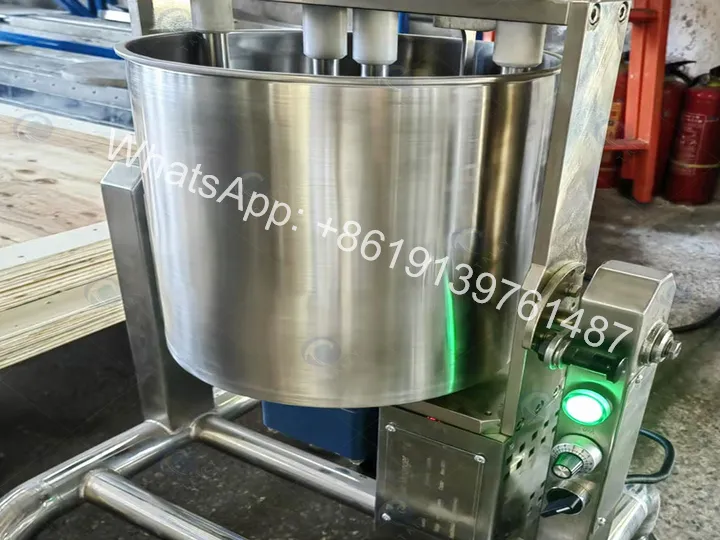
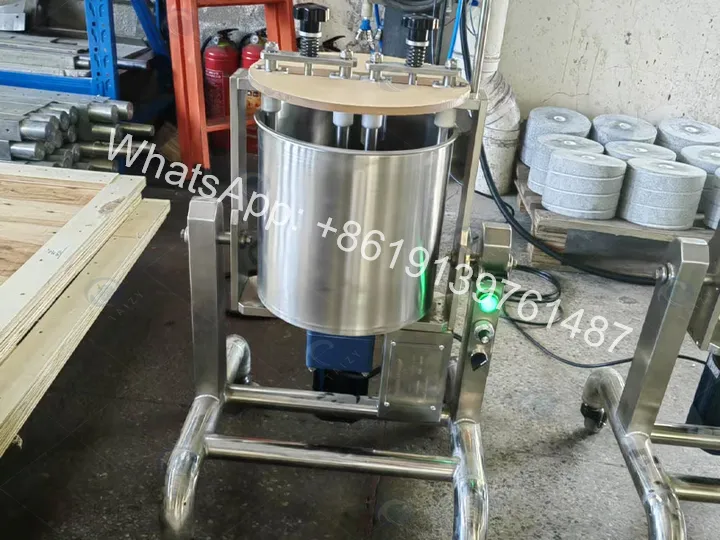
A chocolate stone grinder is a slow-speed refining machine. It uses granite rollers inside a rotating drum to crush and polish cocoa particles. The machine also performs conching. This develops flavor and removes volatile acids.
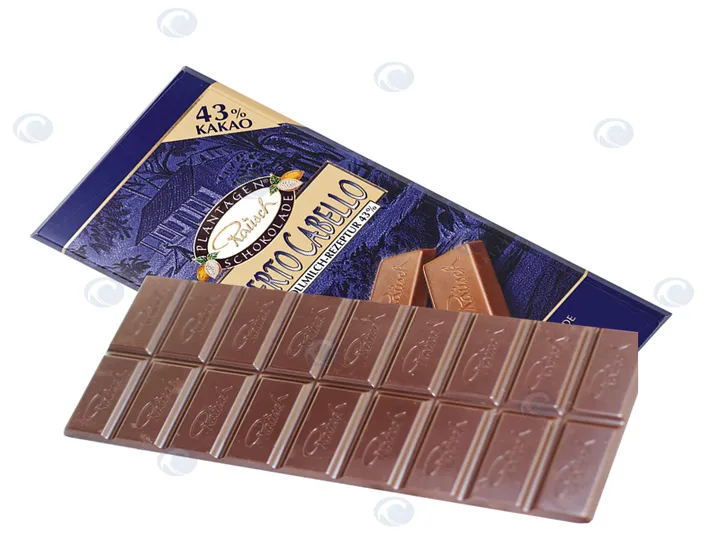
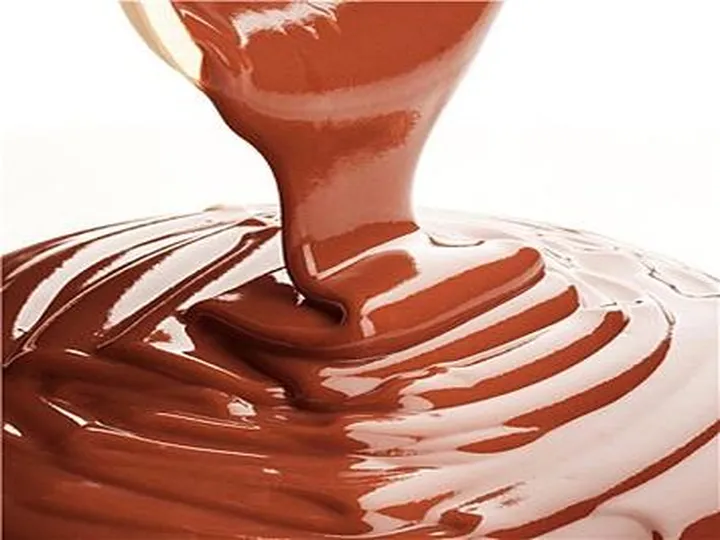
The grinding cycle runs 24 to 72 hours. The final particle size reaches 15–20 micrometers. This produces a smooth mouthfeel. The machine handles cocoa nibs, sugar, and cocoa butter. It also processes nut pastes like hazelnut, almond, and peanut.
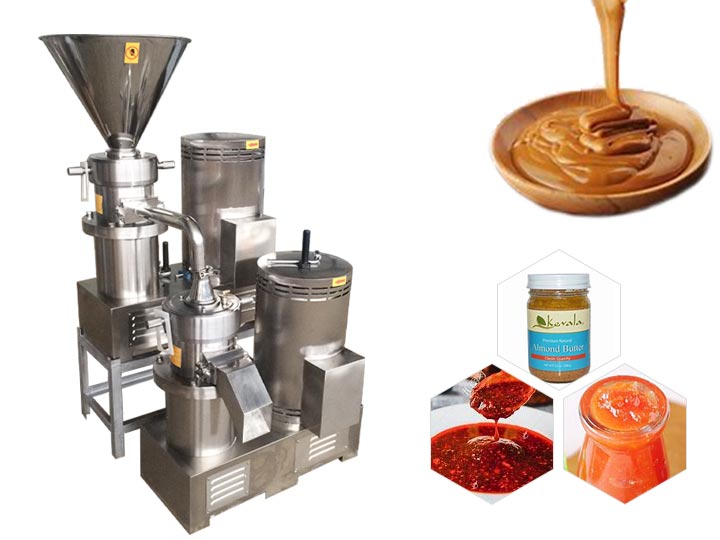
The SMJ series offers five standard sizes. Capacity ranges from 5 kg to 50 kg per batch. All models run on single-phase 220V power. The drum and shell use 304 stainless steel. Rollers are natural granite.
Key Technical Specifications
| Modèle | Pot Capacity | Loading Capacity | Dimensions (L×l×H) | Poids | Pouvoir | Vitesse |
|---|---|---|---|---|---|---|
| SMJ07 | 7 L | 5 kg | 350 × 450 × 600 mm | ~40 kg | 550 W | 0–80 rpm |
| SMJ30 | 30 L | 25 kg | 800 × 900 × 1190 mm | ~220 kg | 1,1 kW | 0–80 rpm |
| SMJ50 | 50 L | 35 kg | 720 × 520 × 1150 mm | 110 kg | 1,1 kW | 0–140 rpm |
| SMJ60 | 60 L | 50 kg | 1160 × 800 × 1290 mm | ~320 kg | 2,2 kW | 0–80 rpm |
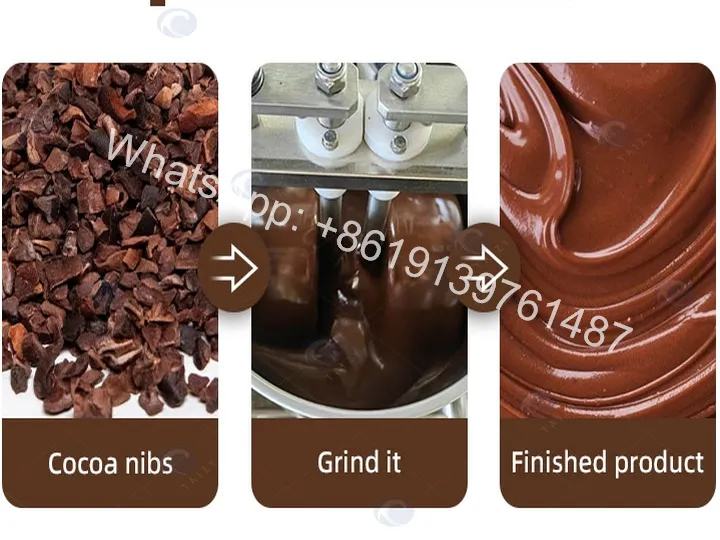
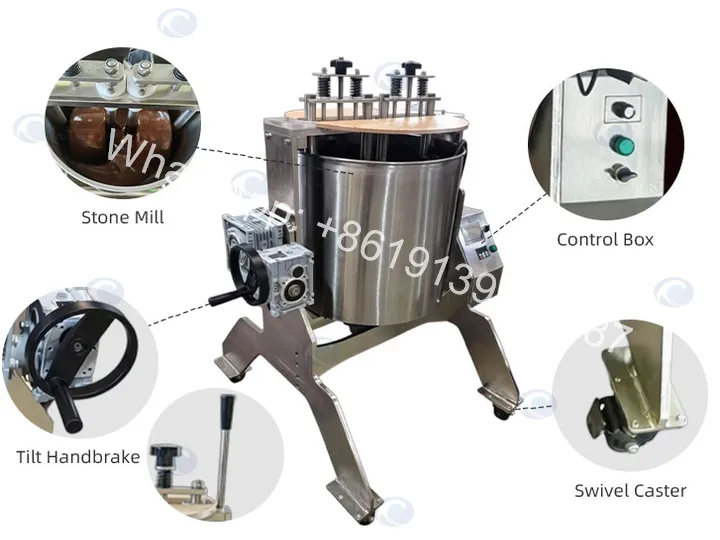
All models feature a handwheel for tilting the drum, allowing easy discharge of the finished chocolate. A thermometer port is also provided to monitor the batch temperature during grinding.
How Does the Chocolate Stone Grinder Work?
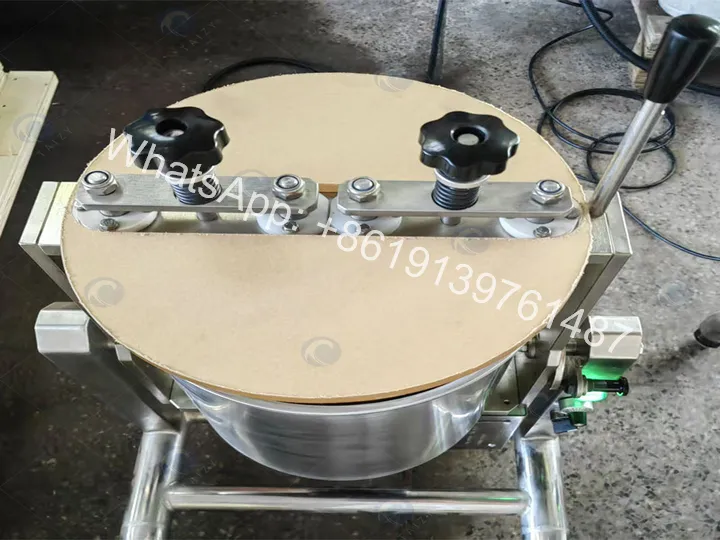
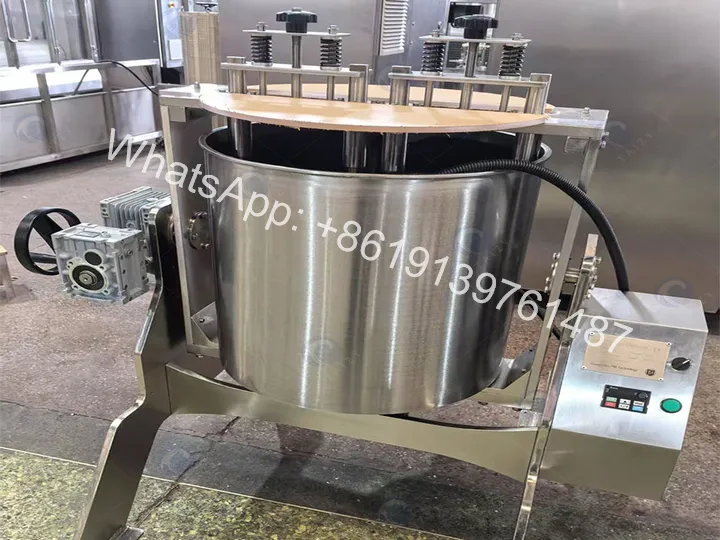
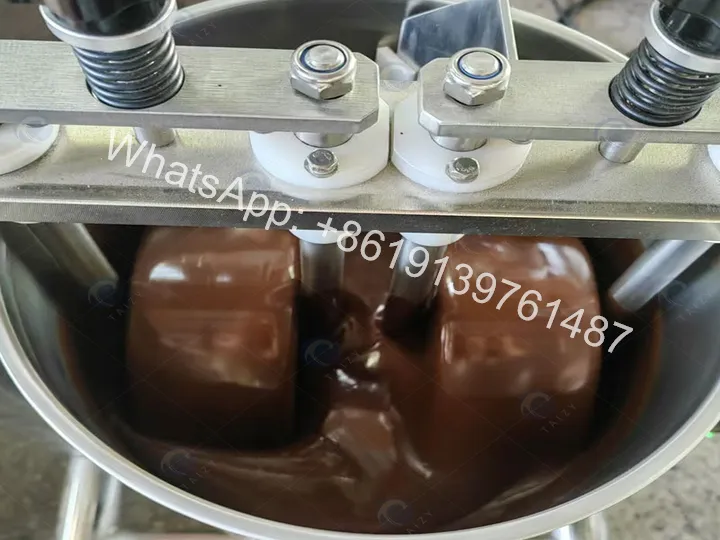
The machine uses two granite rollers inside a rotating stainless steel drum. The rollers turn slowly against the drum wall. They crush and shear cocoa particles between the stone surfaces.
The Grinding Cycle
- Loading: Roasted, cracked cocoa nibs enter the drum. Sugar and cocoa butter are added if the recipe requires them.
- Initial breakdown: The granite rollers crush the nibs into a coarse paste.
- Continuous refining: The paste circulates through the roller gap. Particle size drops with each pass.
- Conching action: The slow shear and gentle heat drive off volatile acids. This reduces bitterness and develops flavor.
- Final particle size: After 24–72 hours, the chocolate reaches 15–20 μm. It is ready for tempering.
The low rotation speed keeps the batch below 50°C. This protects the cocoa’s natural aroma. It also prevents scorching.
What Is the Difference Between Small and Large Capacity Models?
Small Capacity: 5–25 kg per Batch
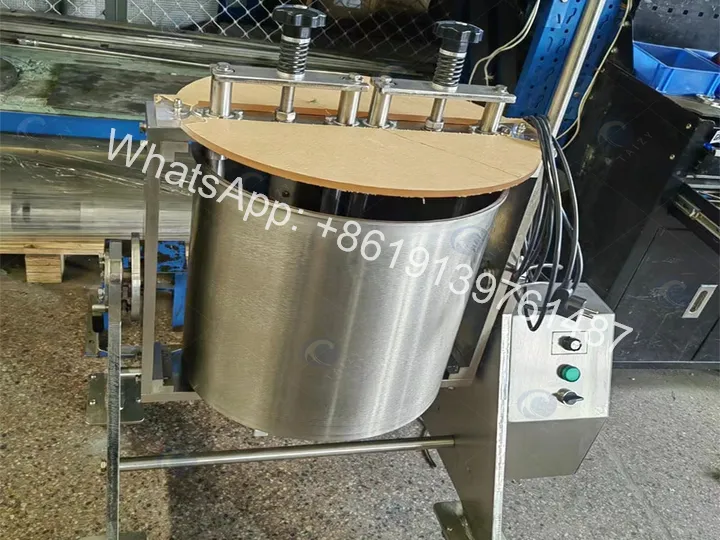
The SMJ07 and SMJ30 suit home artisans, small craft chocolatiers, and recipe development. These machines are compact. They fit on a table or stand. The SMJ07 weighs only 40 kg. One person can move it.
Small models run at lower power. The SMJ07 uses 550 W. This keeps electricity costs low. Batch output limits weekly production. A chocolatier running one SMJ30 continuously can produce about 150–200 kg per week.
Large Capacity: 35–50 kg per Batch
The SMJ50 and SMJ60 suit commercial factories. These machines have larger drums and stronger motors. The SMJ60 uses 2.2 kW. It weighs 320 kg and needs a fixed installation.
Large models allow continuous operation. A factory running two SMJ60 machines in shifts can produce over 1,000 kg per week. The SMJ50 offers a wider speed range at 0–140 rpm. This shortens cycle time for larger batches.
Why Choose a Stone Grinder Over Other Refining Methods?
| Caractéristique | Stone Grinder (Melanger) | High-Speed Ball Mill | Roll Refiner |
|---|---|---|---|
| Flavor Retention | Excellent, low heat | Fair, heat buildup | Good, moderate heat |
| Particle Size | 15–20 μm | 15–25 μm | 18–25 μm |
| Grinding + Conching | Combined in one machine | Separate step required | Separate step required |
| Aroma Preservation | High, volatile acids removed | Moderate | Good |
| Niveau sonore | Low | High | Moderate |
| Cleaning Effort | Simple, tilting drum | Complex | Moderate |
| Multi-Product Use | Nut butters, tahini, pastes | Limited | Limited |
| Initial Cost | Low to medium | High | Very high |
A chocolate melanger that combines grinding and conching can reduce initial equipment costs and minimize product transfers. Fewer transfers also help reduce product loss and the risk of contamination.
What Products Can the Machine Process?
Besides cocoa nibs, the machine handles a wide range of nuts and seeds:
- Hazelnut paste for gianduja and pralines
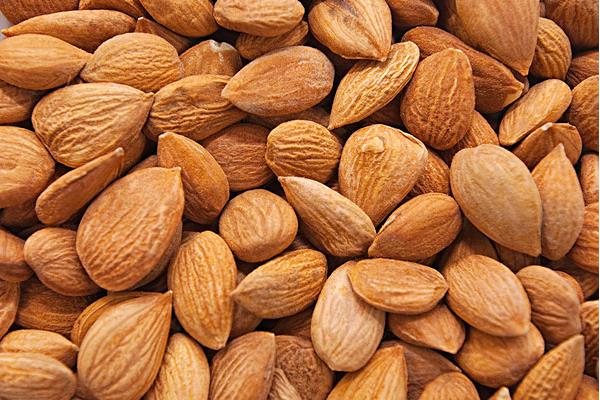
- Almond butter for marzipan and fillings
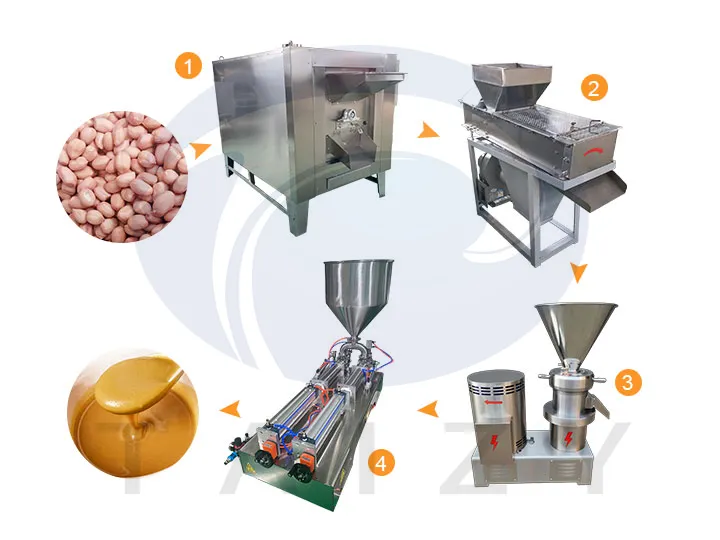
- Peanut butter for confectionery inclusions
- Tahini from sesame seeds
- Coconut paste for vegan chocolate
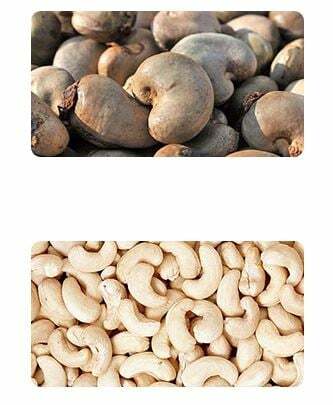
- Cashew butter for white chocolate alternatives
- Pistachio paste for premium pralines
- Sunflower seed butter for allergen-free products
The natural granite rollers do not add a metallic taste. This keeps the flavor clean across all products.

Get a Quote for Your Chocolate Stone Grinder
UN chocolate stone grinder is the heart of a bean-to-bar operation. The SMJ series offers five sizes from 5 kg to 50 kg per batch. Whether you are a home artisan or a commercial factory, there is a model that fits your output target and budget.
Tell us your target batch size, chocolate type, and daily production volume. Our engine