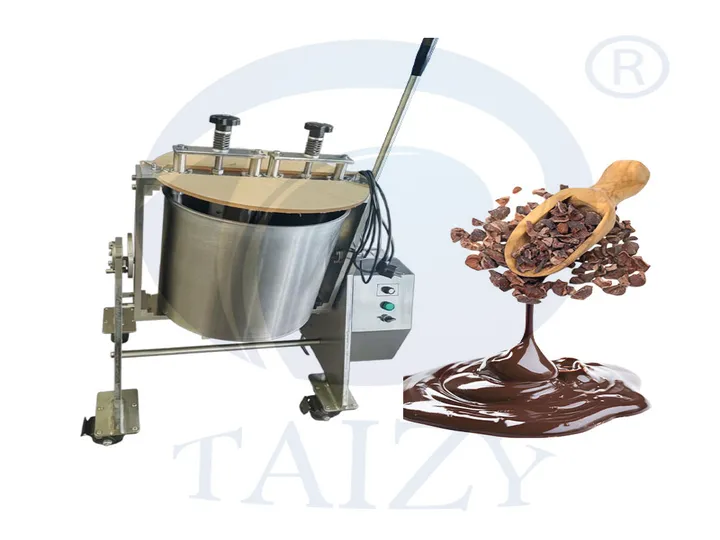
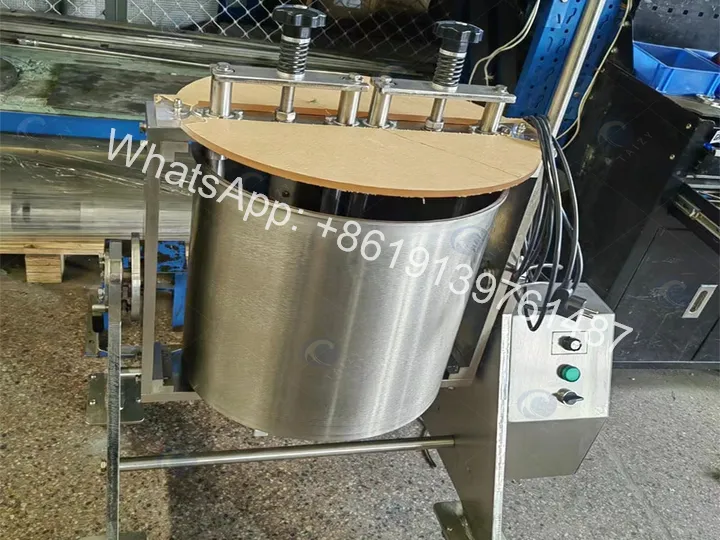
This chocolate grinding machine is a slow-speed stone mill designed to grind and refine cocoa nibs into smooth liquid chocolate. It is also known as a chocolate stone grinder, chocolate melanger, or chocolate refiner. The SMJ series offers five models with different capacities, ranging from 5 kg to 50 kg per batch. The smallest model, SMJ07, handles 5 kg per batch, while the largest model, SMJ60, can process 50 kg per batch. The machine transforms roasted and cracked cocoa nibs into finished chocolate liquor, which is then ready for tempering and molding.
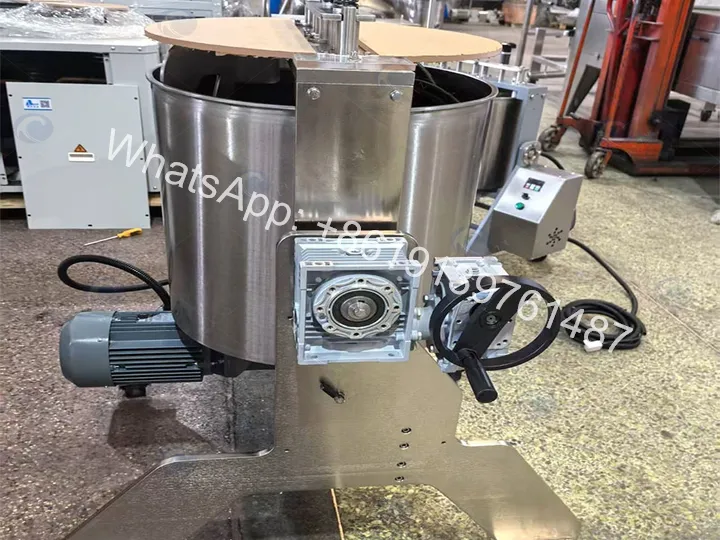
The machine combines grinding and conching in a single vessel, eliminating the need for additional equipment and reducing material loss during transfer. It uses natural stone rollers to grind cocoa nibs. Its low-speed operation keeps the processing temperature below 50°C, effectively preserving the volatile aromatic compounds in cocoa. The final product achieves a particle size of 15–20 micrometers, ensuring a smooth, silky texture without grittiness. In addition, the machine can process hazelnut paste, almond butter, peanut butter, tahini, and coconut paste.
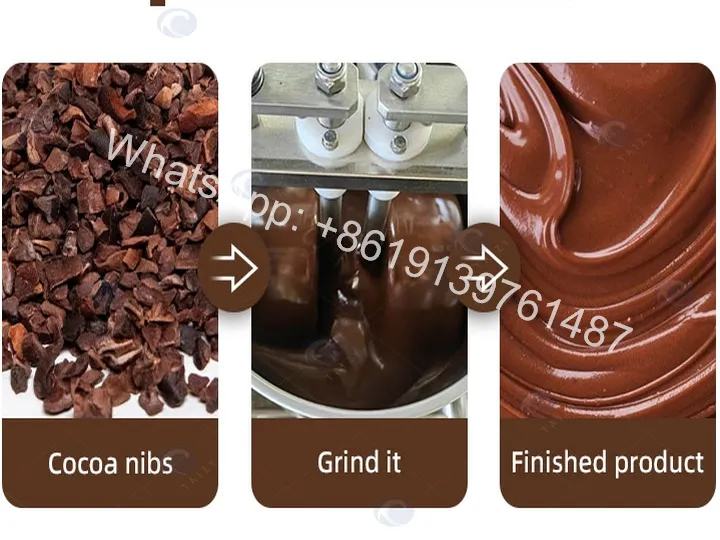
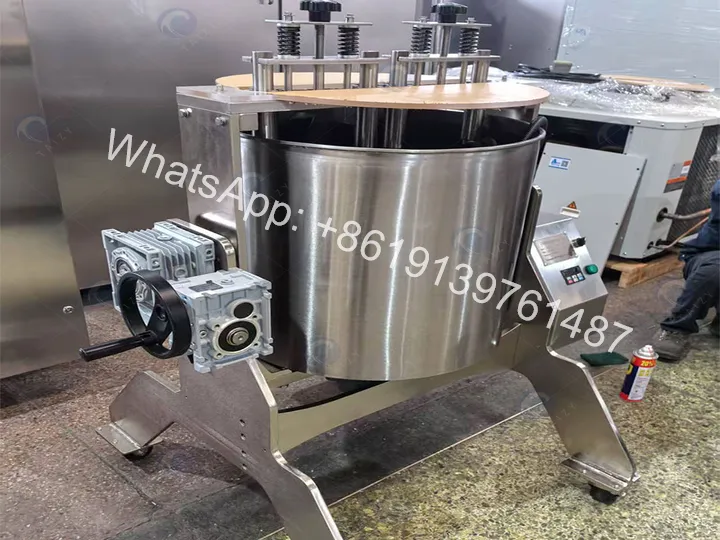
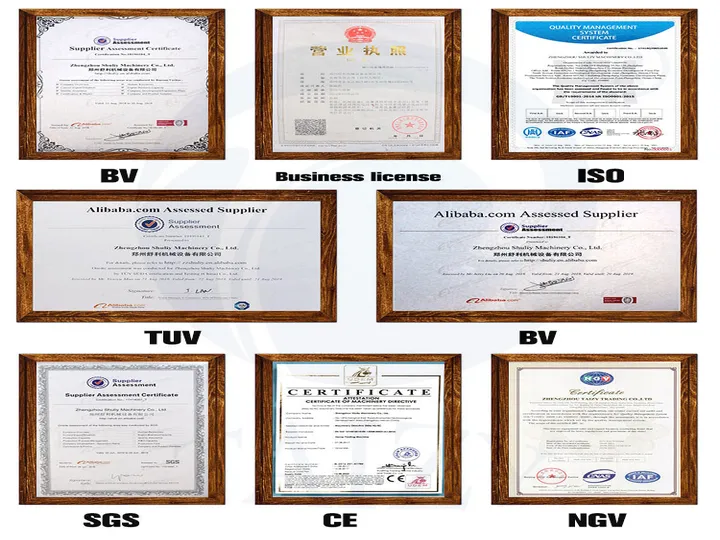
Compared with high-speed ball mills, this chocolate grinding machine better preserves the delicate floral and fruity notes of cocoa while avoiding the potential risk of metal contamination associated with steel grinding equipment. The machine is equipped with a tiltable stainless steel grinding drum for quick discharge and easy cleaning. Taizy has been specializing in cocoa and chocolate processing equipment for over 10 years, with products exported to more than 30 countries. Every chocolate stone grinder is CE certified and comes with a 12-month warranty and lifetime technical support.
What Are the Technical Specifications of the Chocolate Stone Grinder?
| मॉडल | Pot Capacity | Loading Capacity | Equipment Size (L × W × H) | वजन | शक्ति | गति | मोटर |
|---|---|---|---|---|---|---|---|
| SMJ07 | 7 L | 5 kg | 350 × 450 × 600 मिमी | ~40 kg | 550 W | 0–80 rpm, adjustable | Built-in |
| SMJ30 | 30 L | 25 kg | 800 × 900 × 1190 मिमी | ~220 kg | 1.1 किलावॉट | 0–80 rpm, adjustable | Built-in |
| SMJ50 | 50 L | 35 kg | 720 × 520 × 1150 mm | 110 kg | 1.1 किलावॉट | 0–140 rpm, adjustable | Built-in |
| SMJ60 | 60 L | 50 kg | 1160 × 800 × 1290 मिमी | ~320 kg | 2.2 किलावाट | 0–80 rpm, adjustable | Built-in |
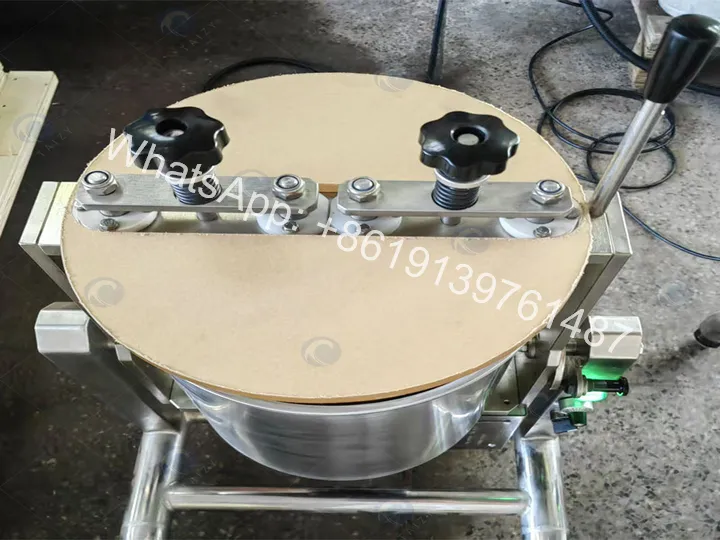
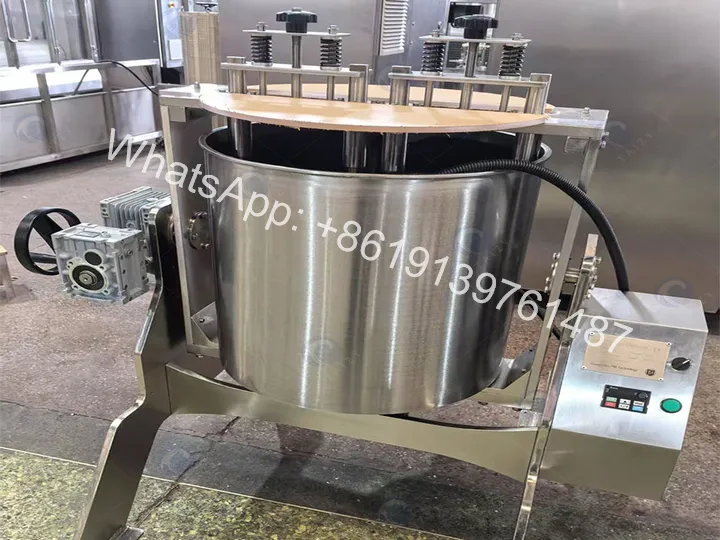
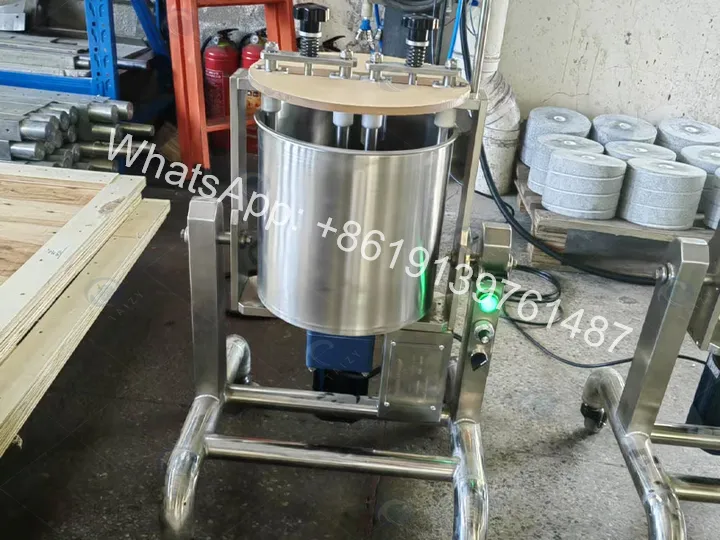
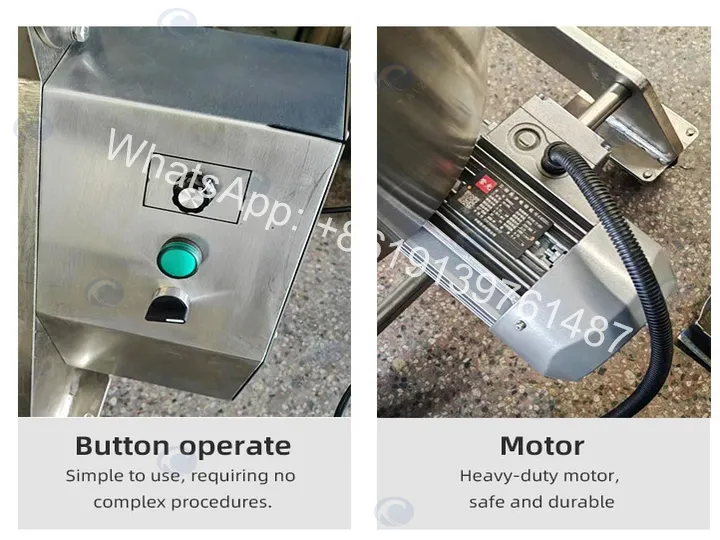
All models use a 220V, 50Hz single-phase power supply. The shell is made of 304 stainless steel. The grinding rollers are made of natural granite. A handwheel device allows the drum to tilt for discharge. Temperature can be monitored during operation.
How Does the Chocolate Grinding Machine Work?
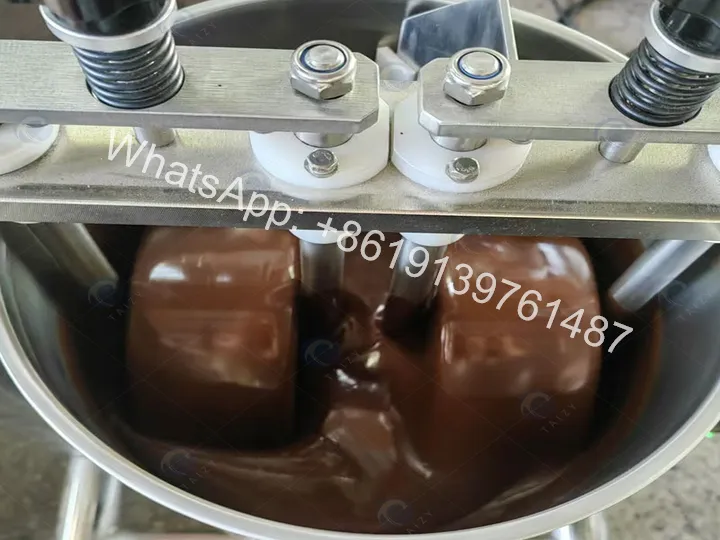
The machine uses two natural granite rollers inside a rotating stainless steel drum. The rollers turn slowly against the drum wall. They crush and shear the cocoa particles between the stone surfaces.
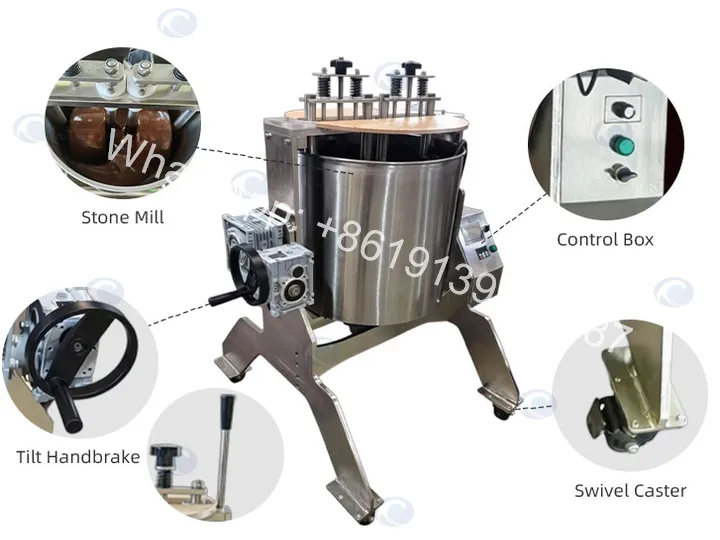
The Grinding Cycle
- Loading: Cracked cocoa nibs enter the drum. Sugar and cocoa butter are added if the recipe requires them.
- Initial breakdown: The granite rollers crush the nibs into a coarse paste.
- Continuous refining: The paste circulates through the roller gap. Particle size drops with each pass.
- Conching action: The slow shear and gentle heat drive off volatile acids. This reduces bitterness and develops flavor.
- Final particle size: After 24–72 hours, the chocolate reaches 15–20 μm. It is ready for tempering.
Temperature Control
The low rotation speed keeps the batch below 50°C. This is critical. High temperatures destroy aromatic compounds. They also cause the chocolate to scorch. Some operators use a small heater to hold the batch at 45–50°C during the final conching phase. This speeds up flavor development without burning.
What Particle Size Can the Chocolate Melanger Reach?
The finished chocolate reaches 15–20 micrometers. The human tongue detects particles above 20–25 μm as gritty or sandy. Below that threshold, the chocolate feels smooth and melts evenly on the palate.
The long grinding cycle ensures that every particle passes through the roller gap multiple times. This produces a uniform distribution. High-speed mills can reach similar fineness in minutes. However, they generate heat and can strip volatile aromas. The stone grinder takes longer but preserves more flavor.
What Capacity Options Are Available?
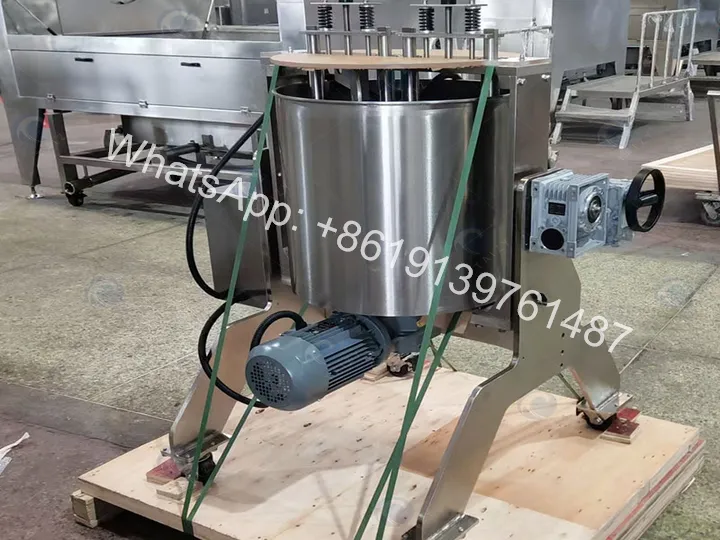
The machine comes in five standard sizes. This range covers home artisans, small craft chocolatiers, and commercial factories.
| Scale | मॉडल | Batch Size | सर्वश्रेष्ठ के लिए |
|---|---|---|---|
| Sample / Home | SMJ07 | 5 kg | Recipe development, small-batch testing |
| Small craft | SMJ30 | 25 kg | Artisan chocolate shops, bean-to-bar startups |
| Medium commercial | SMJ50 | 35 kg | Growing brands, daily production |
| Large commercial | SMJ60 | 50 kg | Factory-scale output, continuous shifts |
The SMJ50 offers the widest speed range at 0–140 rpm. The other models run at 0–80 rpm. The higher speed on the SMJ50 shortens cycle time for larger batches.
Why Choose a Chocolate Stone Grinder Over Other Refiners?
| विशेषता | Stone Grinder (Melanger) | High-Speed Ball Mill | Roll Refiner |
|---|---|---|---|
| Flavor retention | Excellent, low heat | Fair, heat buildup | Good, moderate heat |
| Particle size | 15–20 μm | 15–25 μm | 18–25 μm |
| Grinding + conching | Combined in one machine | Separate step required | Separate step required |
| Aroma preservation | High, volatile acids removed | Moderate | Good |
| Noise level | Low | High | Moderate |
| Cleaning effort | Simple, tilt drum | Complex | Moderate |
| Multi-product use | Nut butters, tahini, pastes | Limited | Limited |
A chocolate refiner that combines grinding and conching saves capital. It also reduces the number of transfers. Each transfer loses product and exposes the chocolate to contamination risk.
What Products Can the Chocolate Grinding Machine Process?
Besides cocoa nibs, the machine handles a wide range of nuts and seeds:
- Hazelnut paste for gianduja and pralines
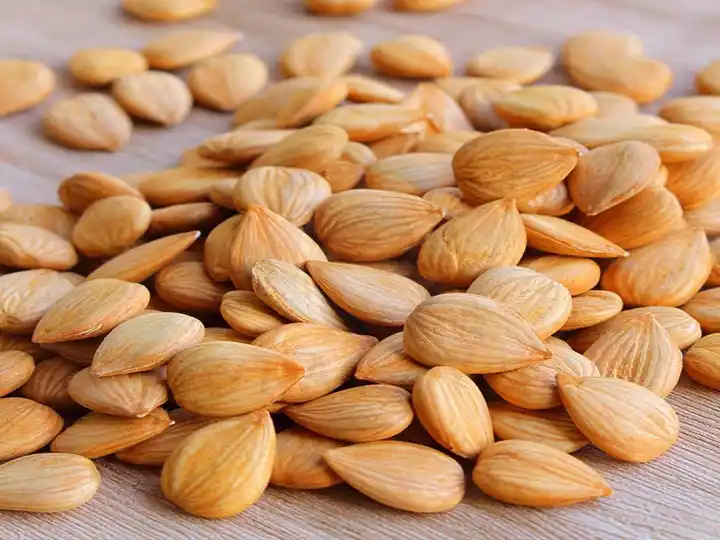
- Almond butter for marzipan and fillings
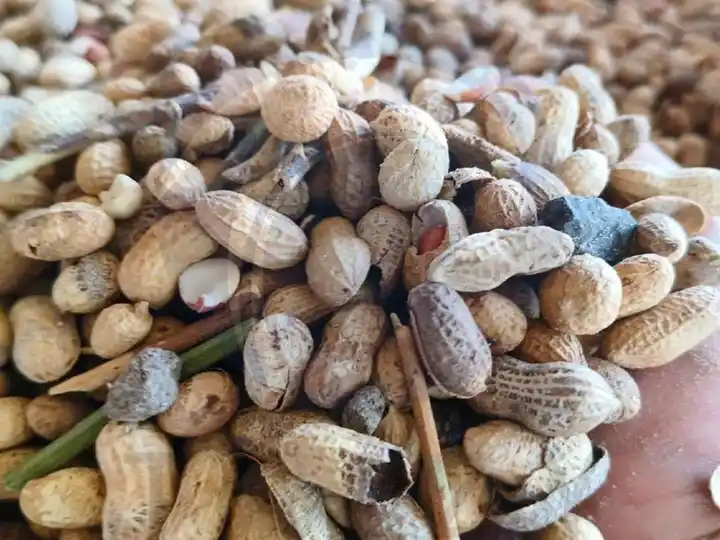
- Peanut butter for confectionery inclusions
- Tahini from sesame seeds
- Coconut paste for vegan chocolate
- Cashew butter for white chocolate alternatives
- Pistachio paste for premium pralines
- Sunflower seed butter for allergen-free products
The natural granite rollers do not add metallic taste. This keeps the flavor clean across all products.

ताइज़ी को क्यों चुनें?
- 10+ years of experience in cocoa and chocolate processing machinery
- Exported to 30+ countries with proven installation and support network
- Complete bean-to-bar line supply from roaster to tempering and molding
- CE-certified equipment with food-grade 304 stainless steel and natural granite rollers
- Five capacity options from 5 kg to 50 kg per batch covering artisan to factory scale
- 12-month warranty on main components with lifetime technical support
- Remote installation guidance and video training for quick commissioning
- Spare parts availability for rollers, scrapers, belts, and bearings
- Custom voltage and plug options for 110V, 220V, or 380V requirements
- Recipe and process consultation from our chocolate-making engineers
Frequently Asked Questions
How long does a single batch take?
A typical batch runs 24 to 72 hours. Dark chocolate with 70% cocoa often finishes in 24 to 36 hours. Milk chocolate with added milk powder may take 48 to 72 hours. The exact time depends on the recipe and target particle size.
What is the smallest batch size for testing recipes?
The SMJ07 model has a 7 L pot and handles about 5 kg per batch. This is suitable for recipe development and small artisan production.
Does the machine require three-phase power?
No. All models run on standard 220V, 50Hz single-phase power. This makes installation simple in most workshops and small factories.
Can I control the temperature during grinding?
Yes. The slow speed keeps the batch below 50°C naturally. Some operators add a low-temperature heater to hold the chocolate at 45–50°C during conching. A thermometer in the drum lid allows monitoring.
How do I discharge the finished chocolate?
Each model includes a handwheel. Turning the wheel tilts the stainless steel drum. The liquid chocolate pours out through a spout into a container or transfer pump.
Is the granite in contact with the food?
Yes. The grinding rollers are natural granite. The drum is 304 stainless steel. Granite is non-porous and does not react with acidic foods. It has been used in food milling for centuries.
What maintenance does the machine need?
The granite rollers and scrapers are wear parts. Inspect them every few months. Lubricate the drive chain and bearings monthly. Clean the drum and rollers thoroughly between batches to prevent flavor carryover.
Can I make both dark and milk chocolate in the same machine?
Yes. Clean the drum between batches. Milk chocolate contains dairy solids that can spoil if left in the machine. A thorough wash with warm water and food-safe detergent is sufficient.
Do you provide the other machines in the bean-to-bar line?
Yes. Taizy supplies the complete line. This includes the cocoa bean roaster, cocoa bean cracker, chocolate grinding machine, chocolate tempering tank, chocolate one-shot depositing machine, and cooling equipment.
What is the delivery time?
Standard models ship in 15 to 30 days after order confirmation. Custom voltages or special configurations may take 30 to 60 days.
Get a Quote for Your Chocolate Grinding Machine
A chocolate grinding machine is the heart of a bean-to-bar operation. It transforms coarse nibs into silky liquid chocolate while preserving the aroma that defines your brand. The SMJ series offers five sizes from 5 kg to 50 kg per batch. All models combine grinding and conching in one vessel.
Tell us your target batch size, chocolate type, and daily production volume. Our engineers will recommend the right chocolate stone grinder and send you a detailed quotation.
Related Products on Our Website – कोकोआ पेस्ट उत्पादन लाइन
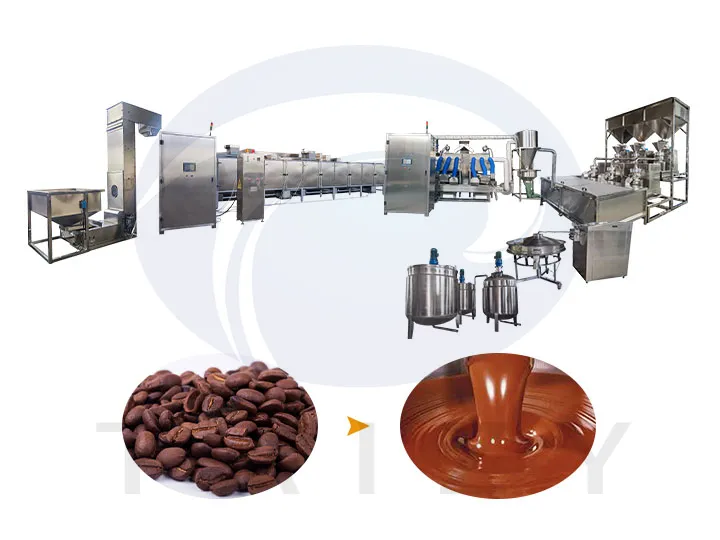
This modular integrated cocoa bean processing assembly offers capacity options from 50 kg/h up to 2000 kg/h, covering full‑process workflow: Z‑type elevating feeding, roasting, shell removing, multi‑stage fine grinding, vacuum degassing, homogenizing and buffer storage. All material‑contact components adopt SUS304 food‑grade stainless steel. The finished cocoa paste can reach fineness up to 200‑mesh for smooth texture and good fluidity. The line supports both semi‑automatic and fully‑automatic configurations; chain‑plate or drum roaster is optional with electric/gas dual heating modes. Besides cocoa liquor / cocoa paste, it can also produce peanut butter and other oily nut pastes after thorough cleaning. Equipped with PLC touch‑screen control system and optional fire‑suppression safety unit, it delivers high‑purity cocoa intermediate products for chocolate factories, cocoa deep‑processing plants, beverage and dessert ingredient manufacturers.
Core Advantages
- Flexible Multi‑Capacity Matching: Multiple model options from small‑workshop 50 kg/h up to industrial 2000 kg/h, supporting semi‑auto or full‑auto layout to satisfy different‑scale production demands.
- Closed‑Loop High‑Yield Shell‑Removal System: Un‑peeled cocoa beans are automatically recycled for secondary processing; shell‑kernel separation reduces raw‑material waste and guarantees low‑impurity cocoa nibs.
- Multi‑Stage Ultra‑Fine Grinding Performance: Combined primary and secondary grinding generates strong shearing and emulsifying effect, stably achieving 60‑200‑mesh adjustable fineness for silky‑smooth cocoa paste.
- Vacuum Degassing & Homogenizing Module: Built‑in vacuum tank eliminates internal air bubbles, improving paste fluidity and stability while inhibiting oxidation for better storage performance.
- Dual‑Mode Roasting Solution: Choose chain‑plate continuous roaster for large‑volume production or drum roaster for small‑batch processing; adjustable roasting parameters lock rich original cocoa aroma.
- Safe & Sanitary Easy‑Maintenance Design: Food‑grade stainless‑steel construction without dead corners for quick disassembly and washing; optional CO₂ fire‑extinguishing device prevents high‑temperature processing risks.
- Complete Customization & After‑Sales Service: 12‑month full‑machine warranty with online debugging and on‑site operator training; heating mode, automation grade, voltage and auxiliary units support personalized customization.