Investing in a خط تولید بادام هندی is more than purchasing equipment—it is a long-term business decision that affects production efficiency, product quality, labor costs, and profitability.
With various capacities, configurations, and suppliers available, selecting the right line can seem challenging. This guide highlights the five key factors to help you make an informed investment and avoid costly mistakes.
Note before reading: If you are interested in the machine featured in this article, please click the three contact options on the right-hand pop-up window to get in touch with us. We will provide you with a quotation within 24 hours.
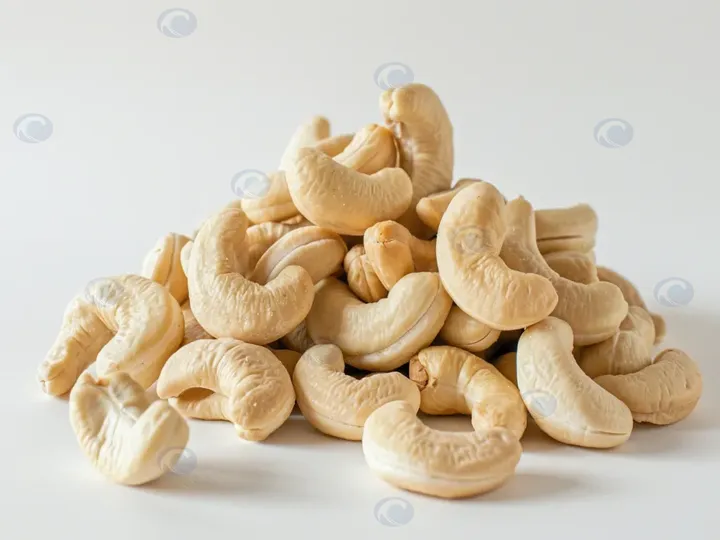
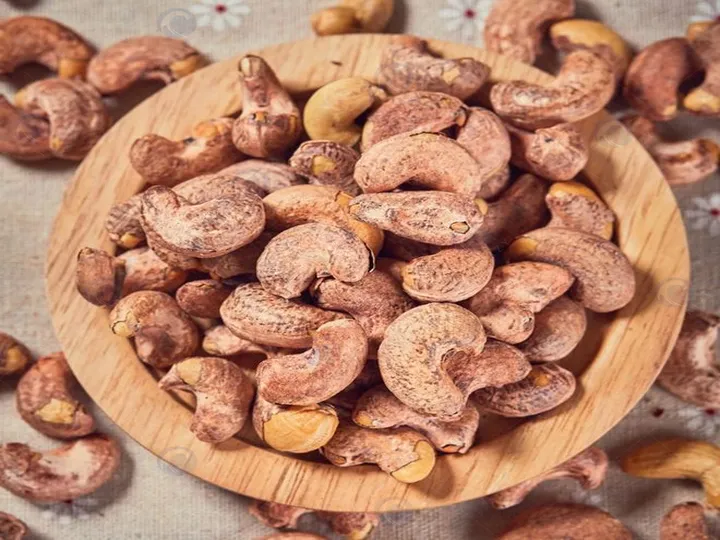
Why Choosing the Right Production Line Matters
An unsuitable processing line can increase operating costs and reduce profitability.
- A line that is too small may limit production during peak seasons.
- A line that is too large ties up unnecessary capital and leaves equipment underutilized.
- Low-quality equipment can increase kernel breakage, reducing product value.
The right production line should match your raw material supply, labor conditions, and target market while delivering consistent, high-quality cashew kernels.
5 Key Factors to Consider
1. Match Capacity to Your Raw Material Supply
Start by estimating how many tons of raw cashews you can reliably source each month.
A practical guideline is to choose equipment capable of processing 80–90% of your available raw material, leaving room for seasonal fluctuations without excessive idle capacity.
Typical production capacities include:
- ۱۰۰–۲۰۰ کیلوگرم در ساعت – Small farms, cooperatives, and startups
- 300–400 kg/h – Medium-sized processors supplying regional markets
- 500–800 kg/h or above – Large-scale factories and export-oriented businesses
If your harvest is seasonal, operating additional shifts may be more economical than purchasing a much larger production line.
2. Choose the Right Automation Level
Semi-automatic lines require manual material transfer and machine feeding. They offer:
- Lower initial investment
- Simpler maintenance
- Suitable for areas with lower labor costs
Fully automatic lines integrate conveyors and automated material handling, providing:
- 60–70% lower labor requirements
- Higher productivity
- More consistent product quality
Although automatic lines require a higher initial investment, they generally provide better long-term returns for medium and large processing plants.
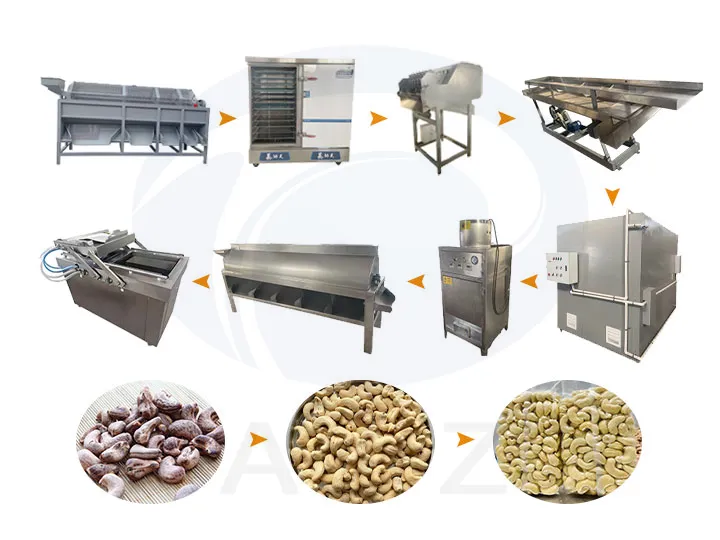
3. Check Machine Materials and Food Safety
Cashew processing involves CNSL (Cashew Nut Shell Liquid), steam, and frequent cleaning, making corrosion resistance essential.
Choose equipment with 304 food-grade stainless steel for all product-contact parts, including:
- Feed hoppers
- Peeling chambers
- Drying trays
- Screens and sieves
Stainless steel improves durability, simplifies cleaning, and helps meet international food safety standards required for export markets.
When comparing suppliers, confirm exactly which components are stainless steel rather than relying on general marketing descriptions.
4. Evaluate the Supplier as Well as the Equipment
A reliable supplier provides much more than machinery.
Before placing an order, ask whether they offer:
- Previous installation experience in your region
- Installation guidance (remote or on-site)
- Operator training
- Spare parts support
- Warranty and after-sales service
Experienced suppliers can also help address local challenges such as unstable power supply, transportation, and factory layout.
5. Consider the Total Investment
The equipment price is only one part of the project cost.
Also include:
- Shipping and customs clearance
- Installation and electrical work
- Initial spare parts
- Operator training
- Factory modifications such as ventilation or flooring
A slightly higher-priced system that includes training, spare parts, and technical support often delivers a lower total cost of ownership over the equipment’s lifetime.
Quick Selection Guide
| Your Situation | Recommended Solution |
|---|---|
| Startup with limited budget | Semi-automatic line, ۱۰۰–۲۰۰ کیلوگرم در ساعت |
| Stable raw material supply | Semi-automatic or hybrid line, 300–400 kg/h |
| Export-oriented production | Fully automatic line, 500 kg/h+ |
| Replacing existing equipment | Match current capacity with 20% future growth |
| هزینه بالای نیروی کار | Fully automatic conveyor-integrated line |
Common Mistakes to Avoid
1. Overestimating raw material supply
Do not design capacity based on optimistic future supply. Use real historical or contracted supply data.
2. Ignoring after-sales support
Downtime directly reduces profit. Spare parts availability and technical response are critical.
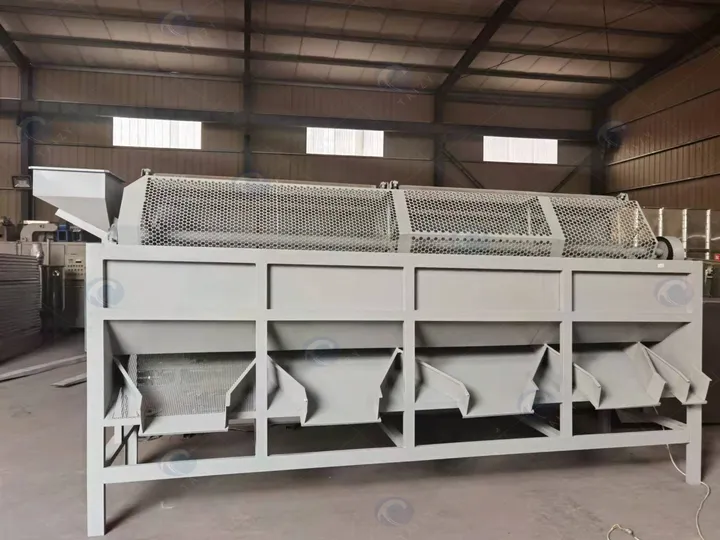
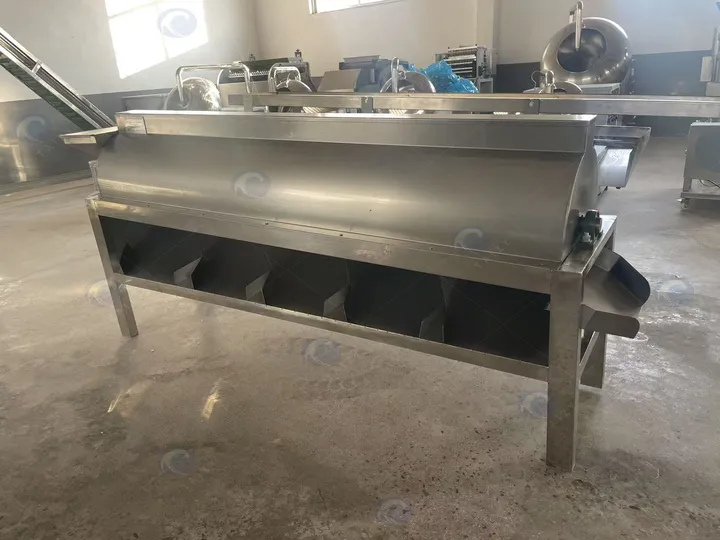
3. Skipping the grading stage
Removing raw nut grading may save cost initially but leads to:
- Higher breakage rate
- Lower shelling efficiency
- Reduced kernel quality
In most cases, the grader pays for itself quickly.
What You Should Provide to Your Supplier
To get an accurate configuration, prepare the following:
- Monthly or daily processing capacity
- Local voltage and power conditions
- Target market (domestic or export)
- Factory space layout
- Labor availability and budget
- Certification requirements (CE, ISO, HACCP)
With this information, suppliers can design a properly matched cashew nut production line instead of offering a standard package.
Final Conclusion
Choosing the right cashew processing equipment depends on three core points:
- Match capacity with real raw material supply
- Select automation based on labor conditions
- Prioritize stainless steel and reliable supplier support
Whether you choose a 100 kg/h semi-automatic line or a 500 kg/h fully automatic system, the best solution is always the one aligned with your actual business scale—not theoretical demand.
A well-planned خط تولید بادام هندی improves efficiency, reduces waste, and ensures consistent export-quality kernels over the long term.
Click the contact window on the right to get in touch with us. We will provide you with a quotation within 24 hours.