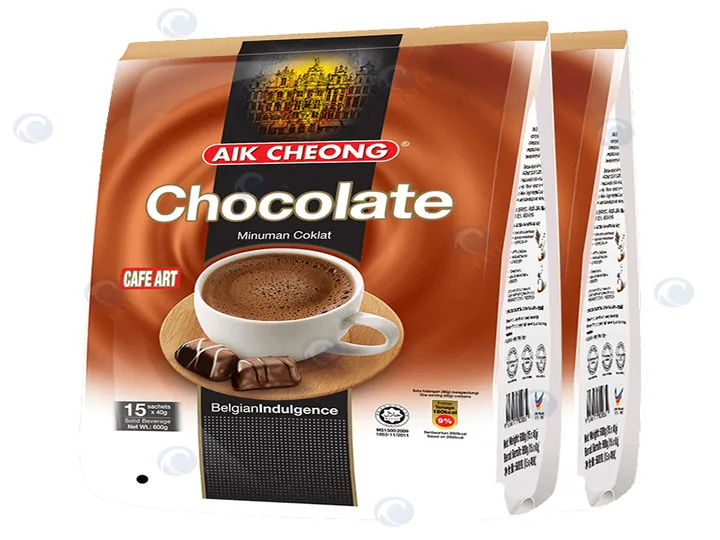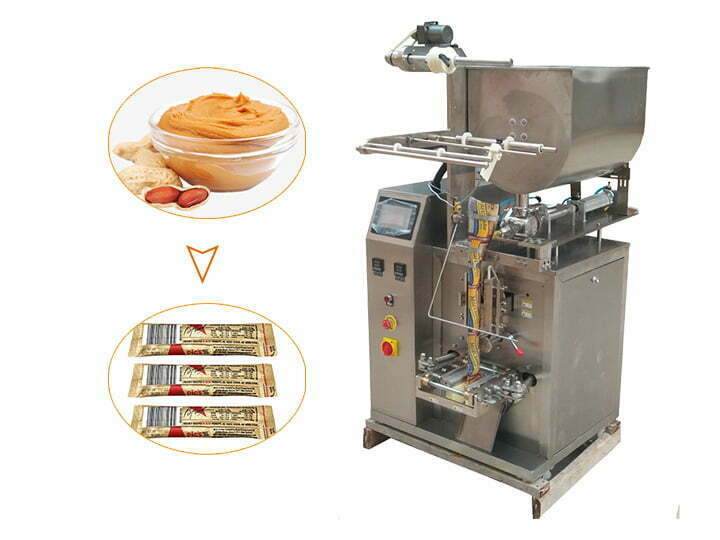
Một automatic cocoa powder packaging machine is designed to handle light, dusty, and easy-to-spill cocoa powder. Packaging it cleanly and accurately at high speed requires more than a simple filler. It uses a controlled metering system, dust management, and automated bag handling to ensure stable and efficient packaging.
This article explains how the machine works step by step. You will learn how cocoa powder moves from a storage hopper into a sealed premade pouch, and what each component does along the way.
Note before reading: If you are interested in the machine featured in this article, please click the three contact options on the right-hand pop-up window to get in touch with us. We will provide you with a quotation within 24 hours.
What Is an Automatic Cocoa Powder Packaging Machine?
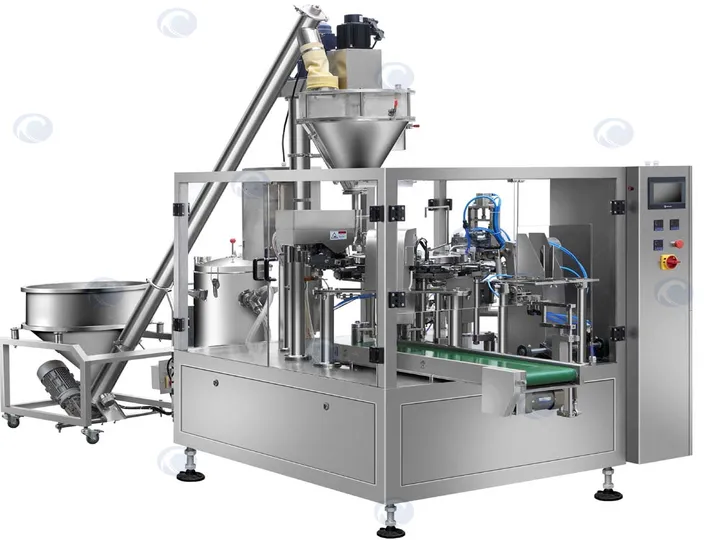
An automatic cocoa powder packaging machine is a rotary premade pouch filling system. It uses an auger filler to measure powder by volume, then dispenses it into zipper stand-up pouches, flat pouches, or three-side-seal bags.
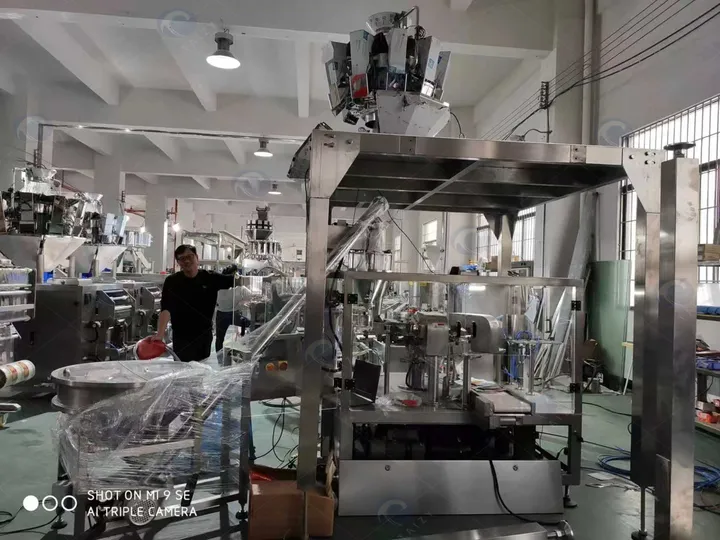
The system described here is the HS8-250-S host paired with a 50L auger filler and screw conveyor. It handles bag widths from 130 mm to 250 mm, bag lengths from 150 mm to 400 mm, and filling weights from 50 g to 1000 g. Speed ranges from 10 to 50 bags per minute depending on powder characteristics and target weight.
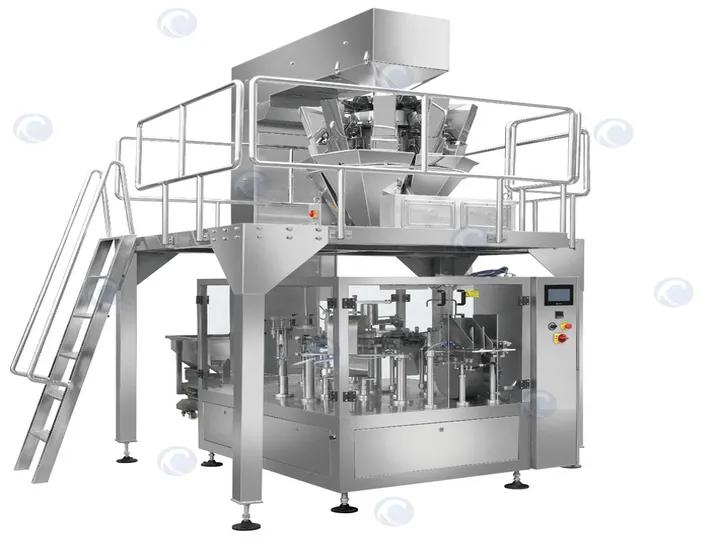
This machine is also called a cocoa powder packing machine or powder packaging machine. The same host can be fitted with a multihead weigher for granule products, but this article focuses on the powder path.
What Are the Main Components?
The powder packaging line has five core parts:
| Component | Chức năng |
|---|---|
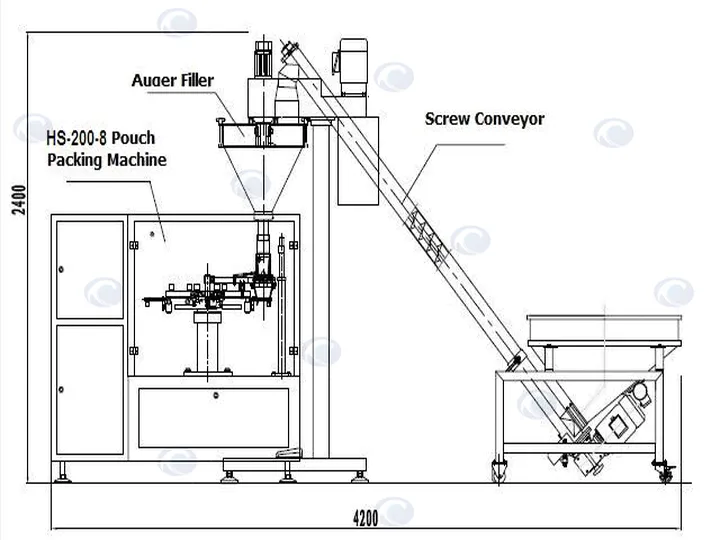
| Screw conveyor | Lifts cocoa powder from a floor-level hopper to the auger filler |
| 50L auger filler | Measures the set weight and dispenses powder into each pouch |
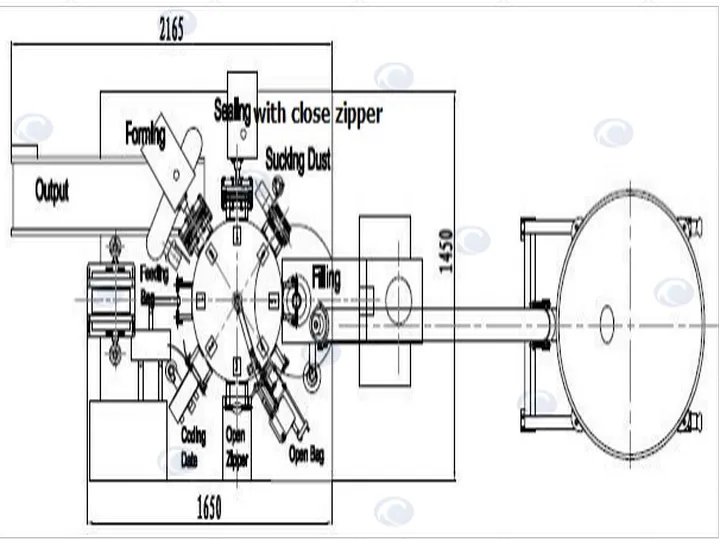
| Rotary bag-giving host | Takes premade pouches, opens them, positions them under the filler, and seals them |
| Dust collector | Removes airborne powder from the bag mouth before sealing |
| Hệ thống điều khiển | Siemens PLC and touchscreen coordinate all movements |
How Does an Automatic Cocoa Powder Packaging Machine Work?
Step 1: Powder Feeding
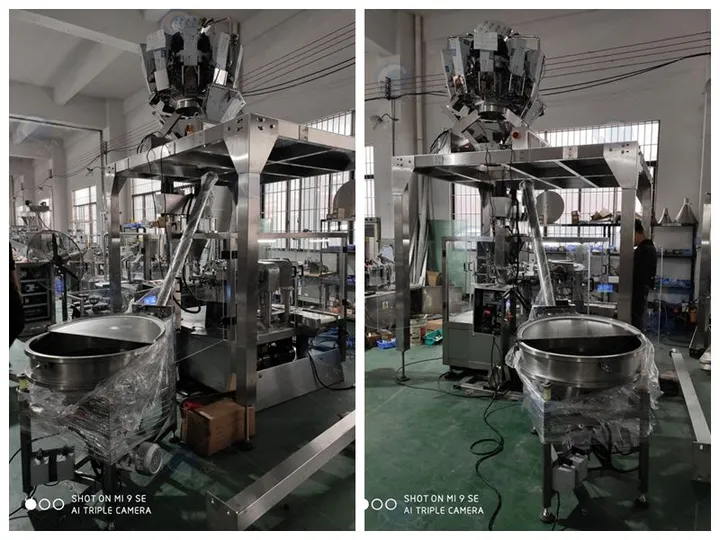
Cocoa powder starts in a round stainless steel hopper. The screw conveyor lifts it vertically through a 114 mm diameter tube to the top of the auger filler.
The conveyor runs at a controlled speed. It keeps the auger hopper full without overfeeding. The round hopper sits on wheels. This makes it easy to move and clean between batches.
Step 2: Powder Metering
The 50L auger filler is the heart of the cocoa powder packing machine. It uses a rotating screw inside a cylindrical chamber.
Here is how it measures each dose:
- The screw rotates and draws powder from the hopper.
- Powder fills the space between the screw flights.
- The screw turns a set number of revolutions based on the target weight.
- The measured dose drops through a funnel into the open pouch below.
The servo motor controls the screw rotation. This gives precise and repeatable dosing. Accuracy reaches ≤±1% for weights between 100 g and 500 g. For smaller doses under 100 g, accuracy is ≤±2%.
Operators can store up to 7 production recipes on the touchscreen. They can adjust fill weight, screw speed, and cycle timing without mechanical changeover.
Step 3: Bag Feeding and Opening
The HS8-250-S host uses vacuum suction grippers to pick up premade pouches one by one from a magazine.
The bag-handling sequence works like this:
- A gripper pulls the top pouch from the magazine.
- The host rotates the pouch to the coding station.
- A thermal ribbon printer stamps the production date or lot code.
- The pouch moves to the opening station.
- Vacuum suction opens the bag mouth.
- For zipper pouches, a zipper opening device separates the seal.
- For stand-up pouches, a bottom-opening device forms the base.
If the bag fails to open, sensors detect the fault. The machine skips filling and triggers an alarm. This prevents product waste and messy seals.
Step 4: Filling
The opened pouch stops under the auger filler nozzle. The measured dose of cocoa powder drops into the bag.
Because cocoa powder is fine and dusty, this stage creates airborne particles. The dust collector nozzle sits at the bag mouth. It pulls powder away during and after filling. This keeps the sealing area clean.
Without dust collection, powder would stick to the inner bag surface. The seal would become weak or uneven. Packages could leak or fail inspection.
Step 5: Sealing
After filling, the pouch moves to the sealing station. The host uses heat-seal jaws to close the bag mouth.
The sealing process includes:
- Pre-sealing jaws close the bag and remove trapped air.
- Main sealing jaws apply heat and pressure for a set time.
- Cooling jaws set the seal before the bag is released.
- The finished pouch discharges onto a collection conveyor or table.
Temperature, pressure, and dwell time are adjustable through the touchscreen. This lets operators match different film materials and pouch thicknesses.
Step 6: Output and Collection
Sealed pouches exit the machine continuously. Operators can collect them manually or connect a downstream conveyor, checkweigher, or carton packing station.
The entire cycle repeats automatically. One operator monitors the touchscreen, checks bag quality, and refills the storage hopper when needed.
How Does the Control System Coordinate Everything?
A Siemens PLC controls all machine movements. A 7-inch Siemens touchscreen gives operators access to:
- Recipe storage and recall
- Fill weight adjustment
- Bag changeover settings
- Temperature and sealing time
- Speed and conveyor timing
- Fault alarms and diagnostic codes
The system also includes safety protections:
- No bag detected: filling and sealing stop
- Bag open failure: alarm and automatic rejection
- Low air pressure: machine stops to protect seals
- Overload or jam: motor protection triggers
Fault codes display on the touchscreen in plain language. This reduces downtime and simplifies troubleshooting.
How Is the Machine Kept Clean?
Cocoa powder leaves fine residue. The machine is built for easy cleaning:
- All contact parts use 304 stainless steel.
- The auger filler hopper opens without disassembly.
- The screw conveyor tube detaches for cleaning.
- Oil-free vacuum pumps prevent oil contamination.
- Smooth welded seams leave no powder traps.
Regular cleaning prevents cross-contamination between batches. It also protects the heat-seal jaws from powder buildup that could weaken seals.
What Makes This Machine Different from Other Powder Fillers?
| Tính năng | Standard Powder Filler | This Automatic Cocoa Powder Packaging Machine |
|---|---|---|
| Dust control | Basic or none | Dedicated dust collector at bag mouth |
| Bag type | Limited to flat pouches | Zipper, stand-up, flat, three-side-seal, four-side-seal |
| Changeover time | 30–60 minutes | About 10 minutes via touchscreen |
| Hệ thống điều khiển | Basic relays | Siemens PLC + touchscreen |
| Electrical parts | Generic brands | Siemens, Delta, Festo, Omron, Airtac |
| Dual-use capability | Powder only | Same host can run granules with multihead weigher |
Get the Right Automatic Cocoa Powder Packaging Machine for Your Product
Understanding how a máy đóng gói bột cacao works helps you choose the right configuration. The key is matching the auger filler, dust collection, and bag type to your product and package.
Tell us about your cocoa powder characteristics, target bag size, and daily output. Our engineers will recommend the right powder packaging machine setup and send you a detailed quotation.