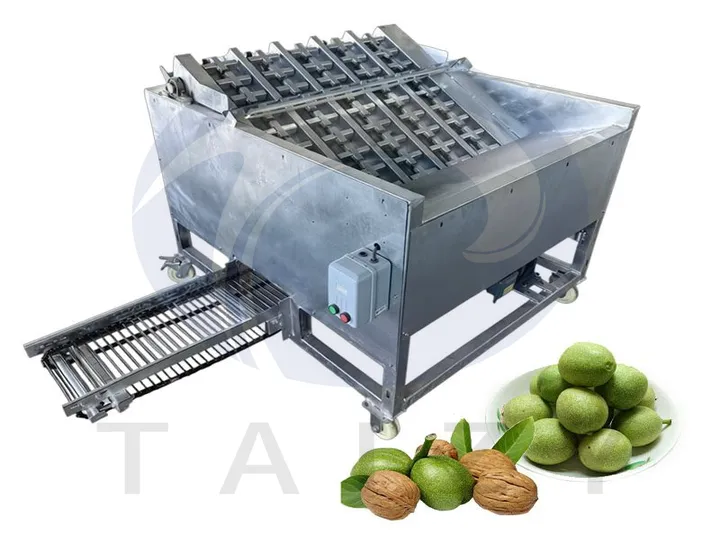
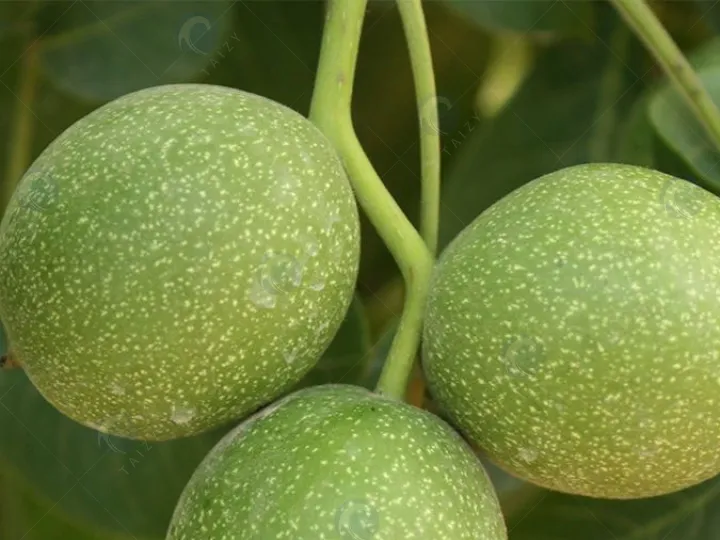
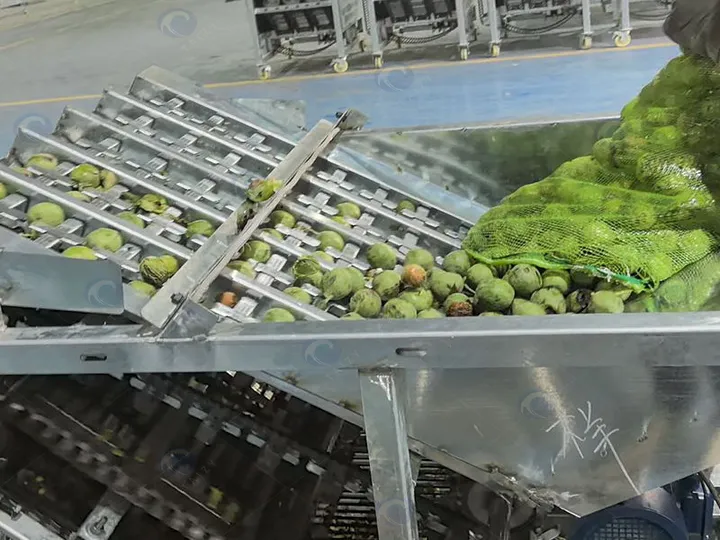
Walnut harvest season brings excitement but also a critical challenge: how do you remove the green outer husk quickly without damaging the walnut? A walnut green husk peeling machine solves this problem by processing freshly picked walnuts immediately, without water, without waiting, and without the heavy labor of manual peeling.
Choosing the right walnut green husk removing machine depends on your harvest volume, working environment, and processing goals. This guide breaks down the five key factors that determine which machine fits your operation, so you can make a confident decision and avoid costly mistakes.
Why Choose a Walnut Green Husk Peeling Machine Over Traditional Methods?
Traditional walnut husking methods—manual peeling, pile-heaping for days, or water soaking—are slow, labor-intensive, and often create quality problems. Here’s why a walnut dehulling machine is the better choice:
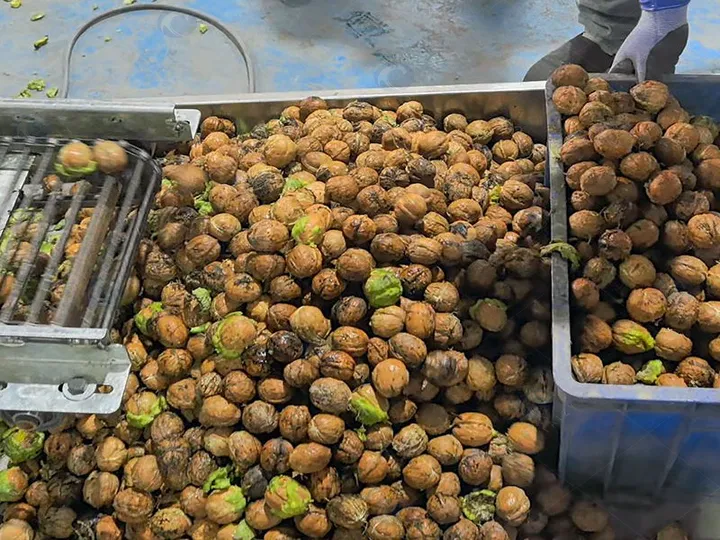
- Immediate processing: Fresh walnuts can be peeled the same day they’re harvested, preserving kernel whiteness and freshness.
- Zero water usage: Dry peeling eliminates wastewater discharge and water costs, making it eco-friendly and compliant with environmental regulations.
- Labor savings: One operator can manage the machine, replacing 5–10 manual workers.
- Higher efficiency: Mechanical output ranges from 3,500 to 6,000 kg/h, compared to 50–100 kg/h for manual peeling.
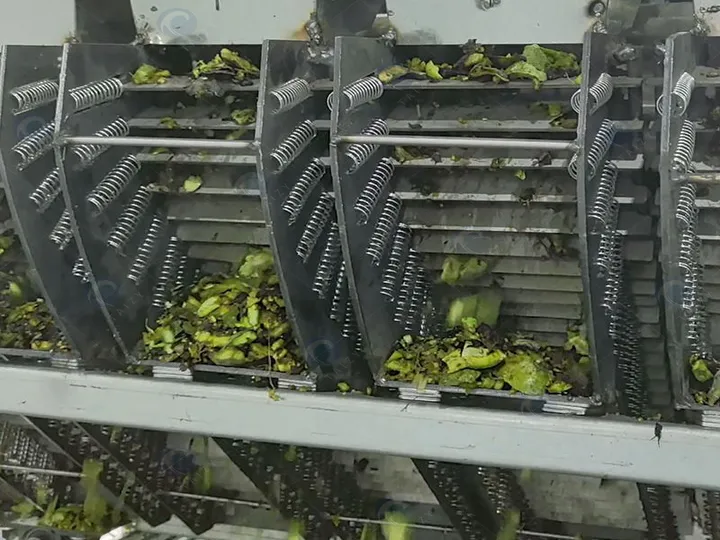
- Better quality: Bionic chain-blade cutting adapts to different walnut sizes, reducing kernel breakage and ensuring uniform peeling.
What Factors Matter When Choosing a Walnut Husk Removing Machine?
1. Match Capacity to Your Harvest Volume
The most common mistake is buying a machine that’s too small or too large for your actual needs.
- Small orchards (under 50 tons/year): Medium model with 3.5 t/h capacity
- Medium cooperatives (50–200 tons/year): Medium or large model depending on processing window
- Large processing plants (200+ tons/year): 6TH-6000 model with ≥6 t/h capacity
Calculate your daily processing target based on your harvest window. If you have 100 tons to process in 10 days, you need at least 10 t/h capacity (assuming 10 hours/day operation).
2. Choose the Right Power Source
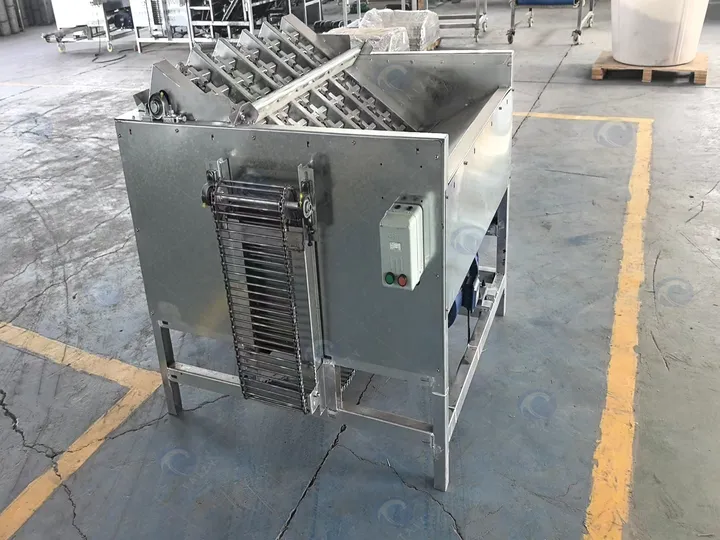
Walnut green husk peeling machine models come with different power options:
- Electric motor (2.2 kW or 1.5 kW): Suitable for facilities with a stable electricity supply
- Tractor PTO drive: Ideal for field operation in orchards without power access
If you process walnuts directly in the orchard and want to eliminate transport costs, the tractor-driven mobile model is the better choice. If you have a fixed processing facility, the electric model offers more stable performance.
3. Check Material Quality
Look for 304 stainless steel on all product-contact parts, including the hopper, sieve body, and sieve mesh. This prevents corrosion from walnut husk acids, meets food safety standards, and extends machine life.
Some suppliers use carbon steel for frames to reduce costs. While this is acceptable for non-contact parts, ensure that blades, hoppers, and discharge channels are stainless steel.
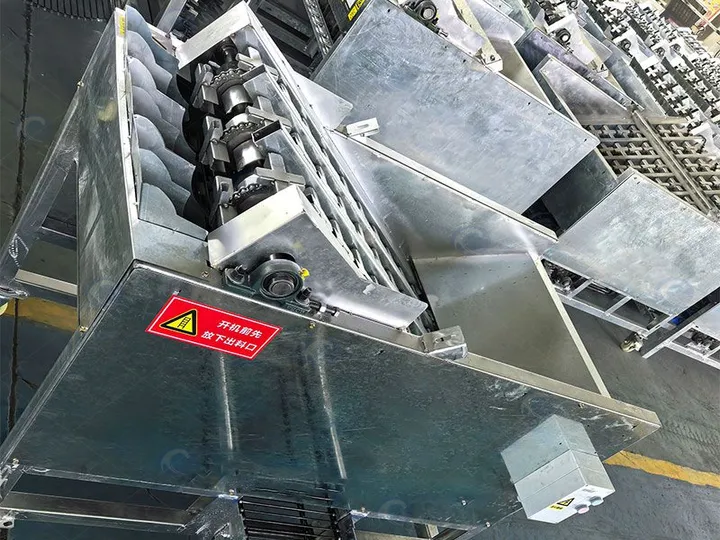
4. Evaluate the Cutting System
The walnut husker machine cutting system directly affects peeling quality. Look for:
- Bionic chain-blade design: Upper and lower blades work together for thorough husk removal
- Buffer springs: Allow blades to adapt to different walnut sizes without damaging kernels
- Stainless steel blade edges: Set at 45-degree angles for clean cutting
A machine with over 100 cuts per walnut in a single cycle will deliver cleaner peeling and lower breakage rates.
5. Consider After-Sales Support
A fresh walnut peeling machine is a long-term investment. Ensure your supplier provides:
- 12-month warranty on main components
- Spare parts availability (blades, springs, belts)
- Technical support via video call or on-site service
- Operation manuals in your language
How to Choose the Right Walnut Dehulling Machine Model for Your Scale?
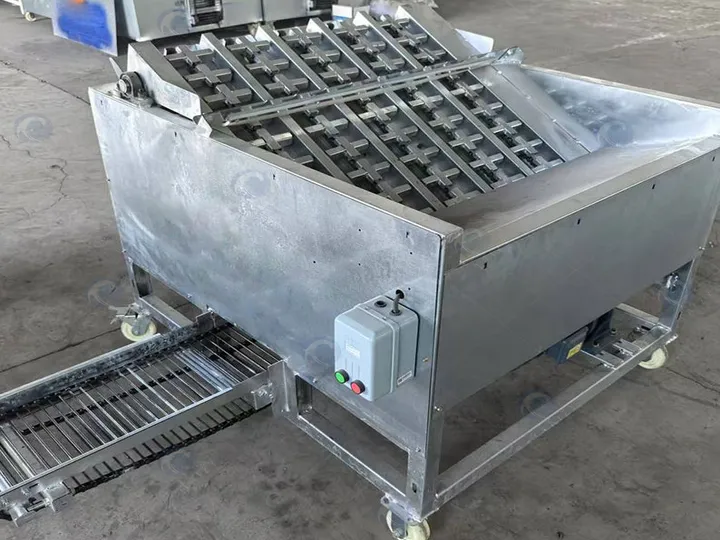
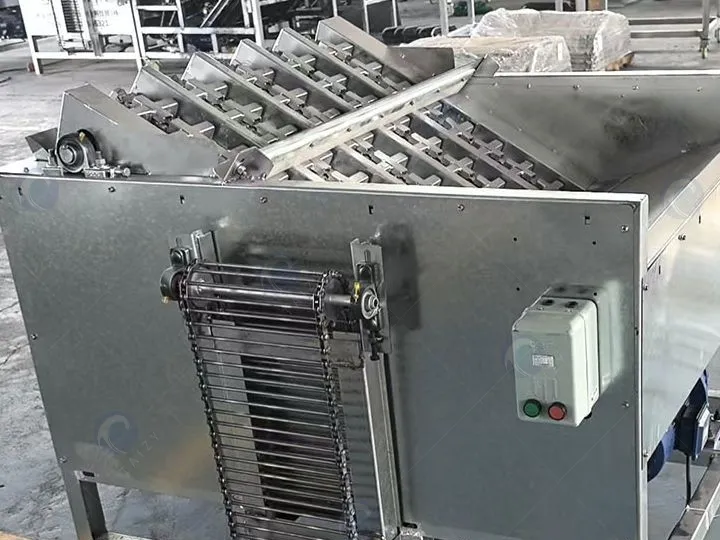
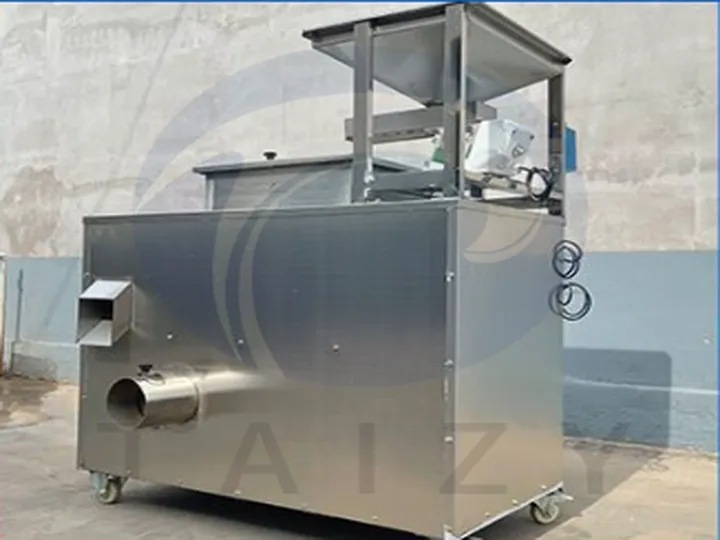
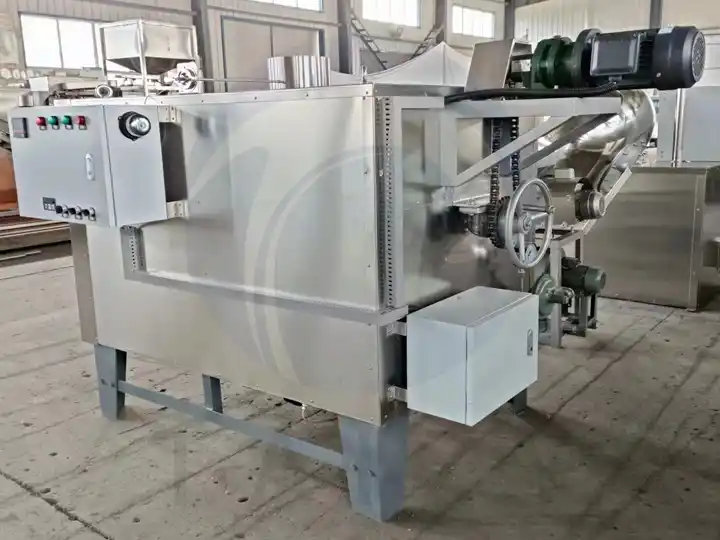
Large-Scale Processing (6TH-6000 Model)
Best for: Large processing plants, agricultural cooperatives, commercial orchards
- Capacity : ≥6 tons per hour
- Power: 2.2 kW gear motor
- Channels: 10 parallel processing channels
- Advantage: Lowest unit processing cost for high-volume operations
Key specifications : - Dimensions: 1390×1340×1180 mm
- Weight: 350 kg
- Moving blades: 38 pieces
- Fixed blades: 23×5 configuration
- Typical peeling cycle: 5–7 minutes
Medium-Scale Processing
Best for: Small and medium processors, family farms
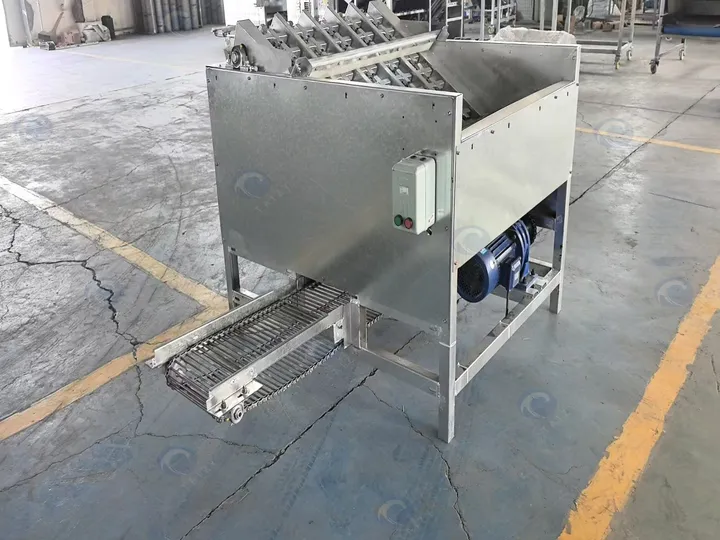
- Capacity: 3.5 tons per hour
- Power: 1.5 kW gear motor
- Channels: 6 parallel processing channels
- Advantage: Balances capacity and investment cost
Mobile Field Operation
Best for: Orchard-side processing, locations without electricity
- Capacity: 3.5 tons per hour
- Power: Tractor PTO drive
- Advantage: Process walnuts directly in the field, eliminate transport costs
What Are Common Mistakes to Avoid When Buying a Walnut Husker Machine?
| Mistake | Why It Hurts | Better Approach |
|---|---|---|
| Buying based only on lowest price | Cheap machines often use poor materials and break down quickly | Compare material quality, warranty, and support |
| Ignoring capacity planning | A machine that’s too small creates bottlenecks; too large wastes capital | Match capacity to actual harvest volume |
| Skipping stainless steel | Carbon steel corrodes quickly in wet, acidic husk conditions | Insist on 304 stainless steel contact parts |
| Forgetting spare parts | Worn blades or broken springs can stop production | Keep essential spare parts in stock |
| Not checking power requirements | Machine won’t work without proper voltage or phase | Confirm your facility’s electrical setup before ordering |
How to Operate and Maintain Your Walnut Green Husk Peeling Machine?
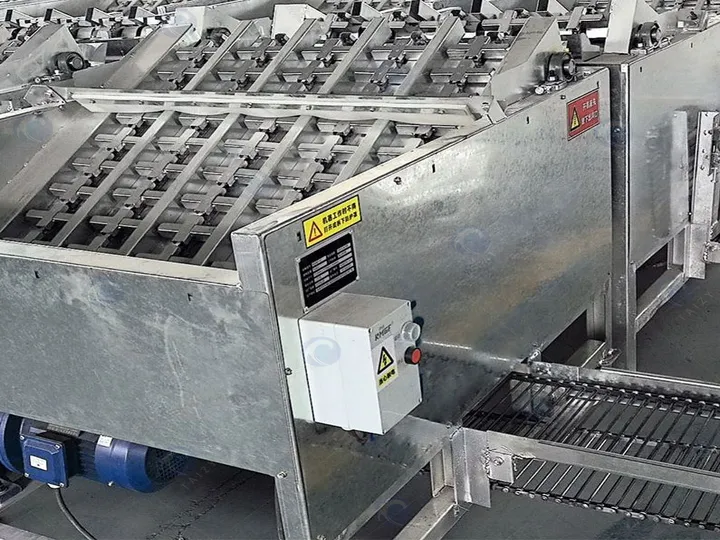
Basic Safety Rules
- Only trained operators should run the machine
- Wear safety goggles, gloves, and fitted clothing
- Check bolts, guards, and feed inlet for debris before starting
- Run empty for 2–3 minutes before loading walnuts
- Never insert hands or tools into the feed inlet during operation
- Stop immediately if you hear abnormal noise
Routine Maintenance
| Timing | Task |
|---|---|
| Before work | Tighten connections, inspect blades, lubricate bearings |
| During work | Check blades and chain for wear |
| After work | Clean husk residue, check fasteners |
| Long-term storage | Clean thoroughly, apply rust-preventive oil, store dry |
Common Problems and Solutions
| Tatizo | Sababu | Suluhisho |
|---|---|---|
| Motor doesn’t start or runs in reverse | Incorrect three-phase wiring | Connect to L1, L3, L5; swap L1 and L5 if reversed |
| Abnormal noise or jamming | Debris in chamber or bent blades | Remove foreign material; straighten blades |
| Poor peeling or high shell damage | Unripe walnuts or blocked blade slots | Rest unripe walnuts 2–4 days; clean blade slots |
What Related Equipment Complements the Walnut Green Husk Peeling Machine?
After husk removal, you may need additional equipment for further processing:
- Walnut Cracking Machine – Shell walnuts after husk removal
- Nut Shell and Kernel Separating Machine – Separate shells from kernels efficiently
- Nut Roaster Machine – Roast walnuts for snack products
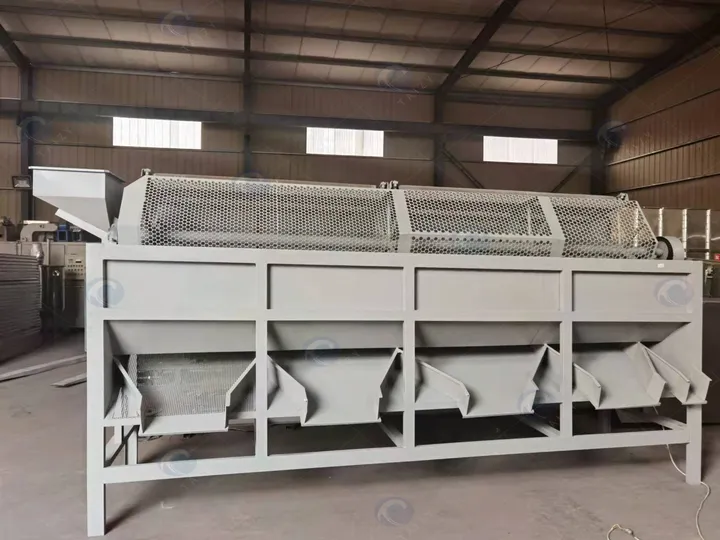
- Nut Grading Machine – Sort walnuts by size before processing
Ready to Choose the Right Walnut Husk Removing Machine?
The right walnut green husk peeling machine depends on your harvest volume, working environment, and processing goals. Whether you need a mobile tractor-driven unit for field operation, a medium-capacity model for your family farm, or a high-volume 6TH-6000 for your processing plant, Taizy has the right solution.
Not sure which model fits your operation? Tell us your harvest volume, working environment, and preferred power source. Our team will recommend the most suitable walnut dehulling machine and provide a detailed quotation.